
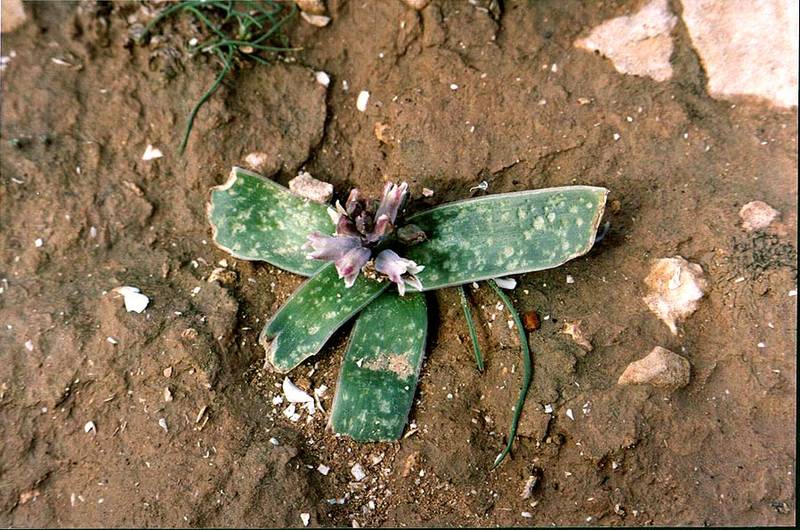

Wild flowers (with leaves eaten by BedouinThe Negev Bedouin. A Photographic Exhibit. Nourit Padon-Melcer sheep) in Negev Desert in northern Beer-Sheva. The Middle East


Album 172: Beer-Sheva, to the north, January 26 - 27, 2001
The image shows a photograph of three wild flowers growing on the ground in the desert near Beer-Sheva, Israel.
* **Flowers:**
* There are three flowers visible in the photo.
* The largest flower is partially obscured by another plant or piece of debris.
* Two smaller flowers are to its left and right.
* **Leaves:**
* The leaves appear to be slightly larger than those on a typical rose bush.
* They are light green in color with darker veins, similar to the pattern seen in other desert plants.
* There is some damage or wear to the leaves, which may indicate that they were once attacked by Bedouin sheep.
* **Background:**
* The background of the image appears to be a dry, sandy terrain covered with small rocks and pebbles.
* A few blades of grass are visible in the top right corner of the photo.
Overall, the image provides a glimpse into the natural beauty of the Negev Desert in Israel, while also highlighting the impact of human activity (in this case, sheep grazing) on the environment. – AI vision


