
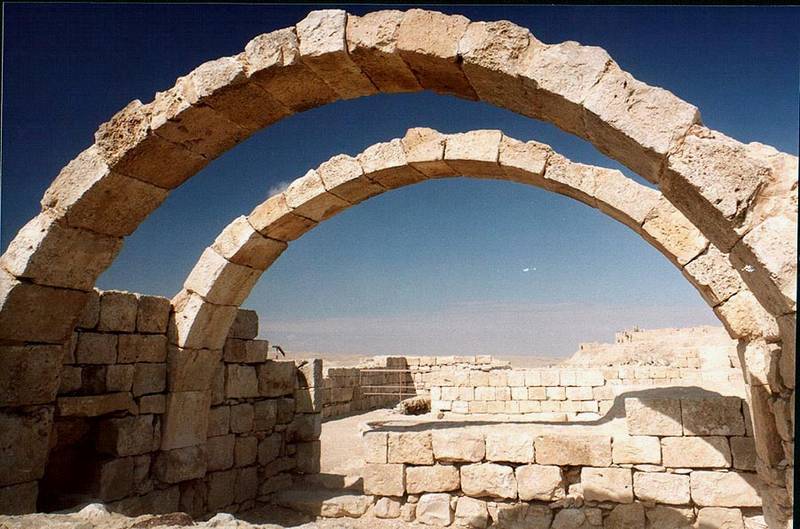

Remains of a Roman house with arches. Avdat, the Middle East


Album 177: Neot Kedumin - Avdat, February 7 - 15, 2001
The image shows the remains of a Roman house featuring several arches. The structure's walls are constructed from stone blocks that have been expertly fitted together to form a sturdy and aesthetically pleasing building.
* **Architectural Style**
* The building is characterized by its use of arches, which were a common feature in Roman architecture.
* The arches add visual interest to the structure and provide support for the roof or other elements of the building.
* **Construction Materials**
* The walls are made from stone blocks that have been cut and fitted together with great care.
* The use of stone suggests that the building was constructed during a period when this material was readily available and affordable.
* **Condition and Age**
* The image appears to be a photograph taken in 2001, suggesting that the building has been abandoned for some time.
* The fact that it remains standing despite being exposed to the elements suggests that it may have been constructed with durable materials and built to last.
In conclusion, the image provides insight into the architectural style and construction techniques used by the Romans. It also highlights the importance of preserving historical buildings and structures, even if they are no longer in use. – AI vision


