
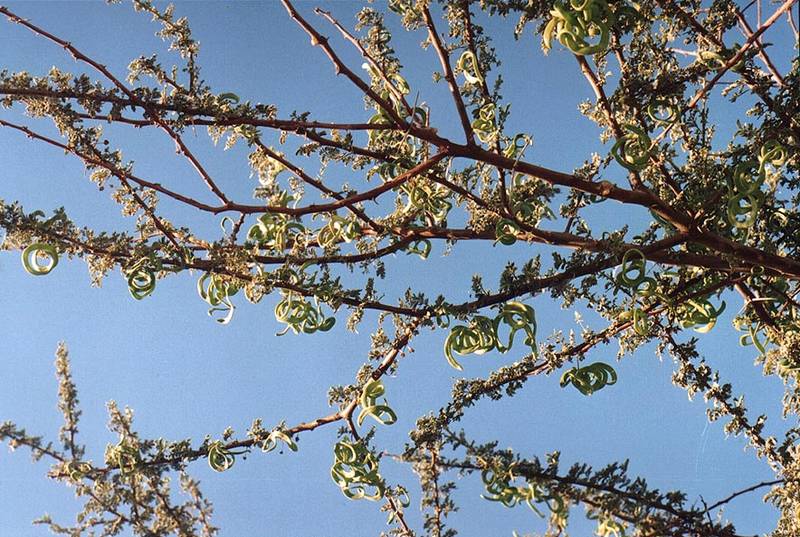

Acacia of Nahal Roded wadi on Arava Valley 2 miles north from Eilat. The Middle East


Album 260: Roded wadi north from Eilat - Galilee, March 14 - 16, 2002
The image showcases a tree with bare branches and green, curled tendrils growing out of them. The plant is likely an Acacia species, given its desert adaptation and location. The tangled vines resemble those found on other plants within the genus.
Acacias are known for their ability to thrive in arid environments, such as the Arava Valley near Eilat. Their stems produce thorns, which act as a defense mechanism against herbivores. This species appears to be flowering or producing new growth, with its small green tendrils sprouting from the branches.
The image was captured in March 2002, during a time of year when many plants are beginning to grow and bloom after winter dormancy. The blue sky suggests that it is daytime, possibly late morning or early afternoon. Overall, the image provides a glimpse into the unique characteristics and adaptations of Acacia species in their natural desert habitat. – AI vision


