
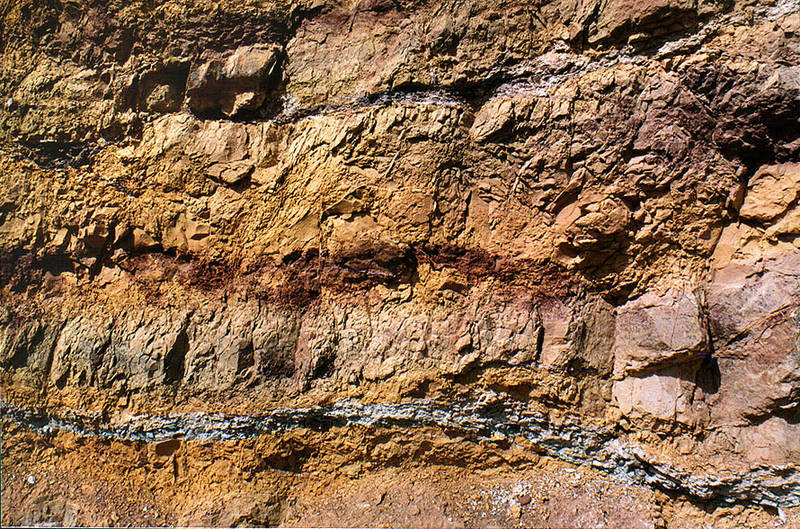

Multicolored layers of wadi Ardon in Ramon Crater. The Middle East


Album 271: Ramon Crater, May 9, 2002
The image showcases a rock face with multiple layers of different colors, likely created by geological processes over time.
At the bottom of the image is a layer of orange and brown rocks that appear to be slightly weathered. Above these rocks are two dark layers: a black one and another just above it that appears gray or brown.
The rest of the rock face consists of mostly orange-brown layers, with some sections being lighter in color. The uppermost section is made up of several layers of different colors, including light yellow, medium orange, dark red, and light pink.
Overall, the image depicts a geological formation created by natural processes that have altered the composition and appearance of the rocks over time. – AI vision


