 |
| |||||||||||||||

| ||||||||||||||||


| Similar | 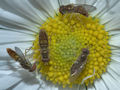  |
  |
  |
  |
  |
| |||||||||||||||||||||||||||
| |||||||||||||||||||||||||||
| 1996 1997 1998 1999 2000 2001 2002 2003 2004 2005 2006 2007 2008 2009 2010 2011 2012 2013 2014 2015 2016 2017 2018 2019 2020 2021 2022 2023 2024 2025 2026 | |||||||||||||||||||||||||||
| New version Slide Show Most Popular Full List Statistics Technical Details Home Page | |||||||||||||||||||||||||||
The common dandelion, a ubiquitous weed found in many gardens and lawns, was teeming with life in the TAMU Horticultural Gardens at Texas A&M University on December 26, 2008. Syrphid flies, delicate and intricately patterned insects, flitted about the dandelion's yellow blooms, sipping nectar and pollen. The flies' presence added a touch of beauty to the otherwise humble weed, highlighting the interconnectedness of life in the garden ecosystem. – generated by AI |
The image features a close-up view of a common dandelion (Taraxacum officinale) with two syrphid flies perched on its yellow petals. The flower is positioned slightly to the right of center in the frame, with one fly resting on the left side and another on the right. * **Common Dandelion:** In summary, the image showcases a common dandelion flower adorned with two syrphid flies. The flower's bright yellow petals provide a striking backdrop for the hovering insects, which are characterized by their slender bodies, large eyes, transparent wings, and long legs. – AI vision |
Un diente de león común con moscas sirfídeas en los Jardines Hortícolas TAMU en Texas A y M University. College Station, Texas, el 26 de diciembre de 2008. La imagen muestra una vista detallada de un diente de león común (Taraxacum officinale) con dos moscas sirfídeas perchadas en sus pétalos amarillos. La flor se posiciona ligeramente hacia la derecha del centro de la imagen, con una mosca descansando en el lado izquierdo y otra en el derecho. **Diente de león común:** El diente de león es una planta herbácea perenne nativa de Europa pero ahora se encuentra en todo el mundo. Tiene una roseta de hojas que puede crecer hasta 6 pulgadas de alto, con bordes dentados y puntas agudas. La cabeza de la flor consiste en muchas flores minúsculas agrupadas en forma esférica, normalmente midiendo de 1/4 a 3 pulgadas de diámetro. Cada flor es amarilla u ocasionalmente blanca, con cinco pétalos y numerosos estambres sobresaliendo más allá de los pétalos. **Moscas sirfídeas:** Las moscas sirfídeas también se conocen comúnmente como moscas oscilantes debido a su capacidad para permanecer en vuelo estacionario. Tienen un cuerpo delgado cubierto de pelos finos y grandes ojos redondeados. Las alas de las moscas sirfídeas son transparentes o con marcas pardas o grises, lo que les da un aspecto delicado. Sus patas son largas y delgadas, lo que les permite caminar por hojas y tallos. En resumen, la imagen muestra una flor de diente de león común adornada con dos moscas sirfídeas. Los pétalos amarillos brillantes de la flor sirven de fondo para los insectos oscilantes, que se caracterizan por sus cuerpos delgados, ojos grandes, alas transparentes y patas largas y delgadas. – Spanish translation |
| [+] | texas dandelion | |
| [+] | dandelion | |
| [+] | common |
Keyword variants
Texas A&M University Horticultural Gardens
high resolution online digital collection
landscape and plant collection
Berlin on the Brazos
Agricultural and Mechanical College
Lone Star State
Horticultural Garden photograph
United States
TAMU campus
public research
picture gallery
photo album
Horticultural Sciences
Hort Gardens
high education
documentary photographs
daily pics
conservative town
Brazos County
Aggie horticulture
univesity
universtiy
univeristy
TX
travelogue
technology
snapshots
sightseeing
science
photowalks
photoblog
graphic
gardening
fotografias
foto
Bryan
botany
America
Aggies
Aggieland
academics