
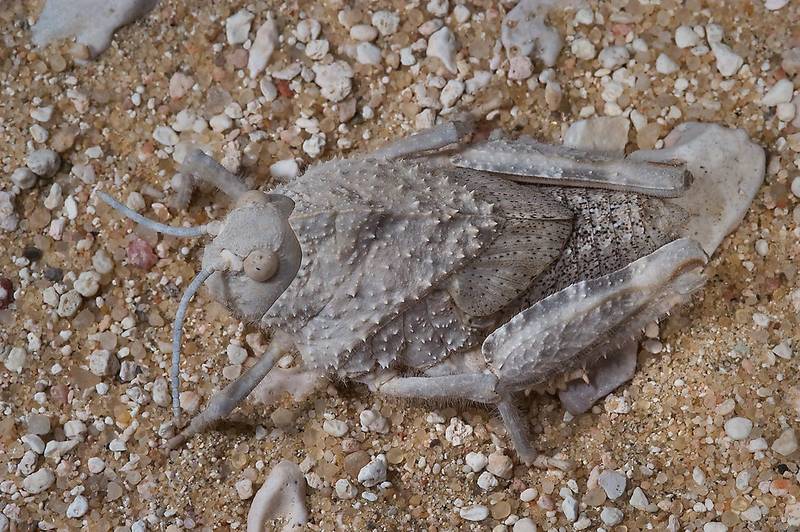

Warty, squat, camouflaged body of grasshopper Tuarega insignis in desert. Harrarah, 40 miles south-west from Doha, Qatar
💾 Download Full Size
Highest-resolution version of the photo
|
📷 Shooting data
Fri 12 Mar 2010 02:53:36 - Exposure: 1/160 sec - Aperture: F/32. - Focal length: 105 mm - ISO 200
📊 Histogram
![Histogram Preview]()

▦ Current Album

|
Album 842: Harrarah - Zubara, Qatar, March 12 - 13, 2010
The image depicts a close-up view of a grasshopper species known as **Tuarega insignis**, situated on a desert floor composed of small rocks and sand.
Upon examination, it is evident that the grasshopper has successfully adapted to its arid environment through camouflage. The insect's body features a mottled coloration, which enables it to blend seamlessly into the surrounding terrain.
The presence of several other insects in the image, including another Tuarega insignis specimen at the bottom left corner, suggests that this species is not an isolated occurrence but rather one that thrives within its desert habitat. – AI vision


