
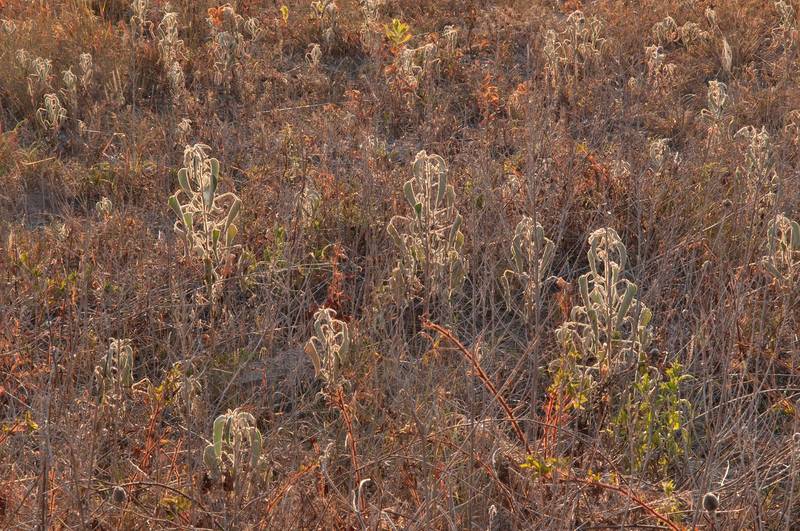
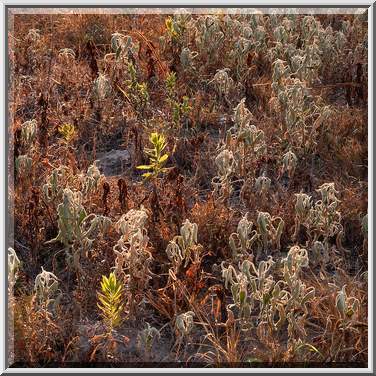
Dry prairie in Washington-on-the-Brazos State Historic Site. Washington, Texas


Album 977: College Station - Independence, Texas, July 26 - August 6, 2011
This image captures a desiccated and overgrown field of dry grasses or weeds, characterized by their brownish hue and sparse appearance. The landscape stretches out to the horizon, devoid of any notable features that might break up its vast expanse.
The image's composition is simple yet striking, with no apparent focal point to draw attention away from the overall atmosphere it evokes. The color palette is muted, dominated by shades of brown, beige, and tan, which contribute to a sense of dryness and desolation. The presence of dead or dying plants suggests that the area has been affected by drought or extreme weather conditions.
Upon closer inspection, one might notice subtle variations in texture and tone within the image. However, these details do not significantly impact the overall mood or narrative conveyed by the photograph. Instead, they add a layer of depth and complexity to an otherwise monochromatic scene.
In terms of visual elements, there are no obvious shapes or forms that stand out from the rest of the composition. The lack of distinct features makes it challenging for viewers to focus on specific parts of the image. Instead, they are invited to immerse themselves in the atmosphere created by the photographer's choice of subject matter and lighting.
Overall, this image presents a stark and haunting portrayal of a parched landscape. Its simplicity belies a wealth of underlying meaning, inviting viewers to contemplate the themes of decay, desolation, and resilience that it embodies. – AI vision
🇪🇸 Descripción en español / Spanish Description
Pradera seca en el Sitio Histórico del Estado de Washington-on-the-Brazos. Washington, Texas, 6 de agosto de 2011. Esta imagen capta un campo seco y crecido de pasto seco o malas hierbas, caracterizado por su tono parduzco y aspecto escaso. El paisaje se extiende hasta el horizonte, desprovisto de cualquier rasgo notable que pueda romper su vasta extensión. La composición de la imagen es simple pero impactante, sin un punto focal evidente que atraiga la atención lejos de la atmósfera general que evoca. La paleta de colores está amortiguada, dominada por tonalidades marrones, beis y tierra, lo que contribuye a una sensación de sequedad y desolación. La presencia de plantas muertas o moribundas sugiere que el área ha sido afectada por la sequía o condiciones climáticas extremas. Al inspeccionar más de cerca, se pueden notar variaciones sutiles en la textura y el tono dentro de la imagen. Sin embargo, estos detalles no impactan significativamente el estado de ánimo general o la narrativa transmitida por la fotografía. En cambio, agregan una capa de profundidad y complejidad a una escena por lo demás monocromática. En términos de elementos visuales, no hay formas obvias que se destaquen del resto de la composición. La falta de rasgos distintivos hace difícil para los espectadores centrarse en partes específicas de la imagen. En su lugar, se invita a inmiscuirse en la atmósfera creada por la elección del tema y la iluminación por parte del fotógrafo. En general, esta imagen presenta un retrato árido y espeluznante de una tierra seca. Su sencillez oculta una riqueza de significado subyacente que invita a los espectadores a contemplar los temas de decadencia, desolación y resiliencia que encarna. – Spanish translation


