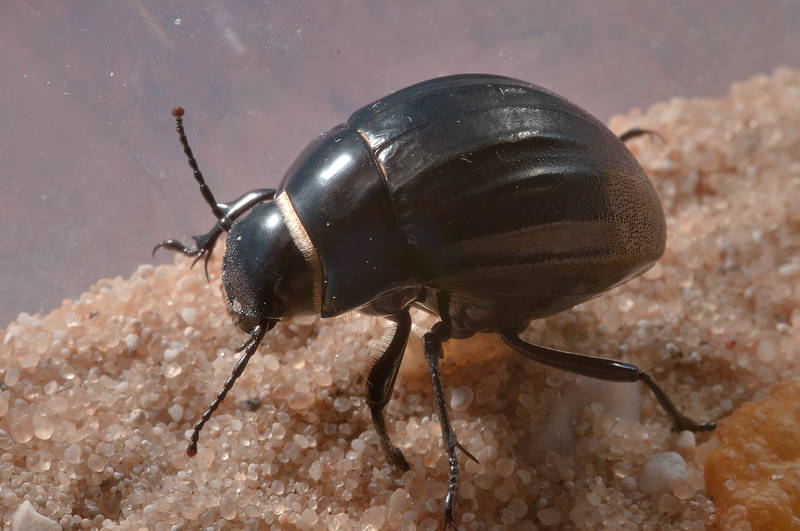

Captured desert beetle Apentanodes arabicus. Doha, Qatar


Album 1024: Doha - Harrarah, Qatar, March 1 - 2, 2012
The image presents a close-up view of a black desert beetle, specifically the Apentanodes arabicus species, situated within a clear plastic container filled with sand and pebbles.
**Subject Matter:**
* The beetle is positioned on the right side of the frame, facing left.
* It has a shiny black exoskeleton adorned with gold markings on its head and thorax.
* Its long, thin antennae protrude from the top of its head.
* The beetle's eyes are not visible due to their small size.
**Composition:**
* The background consists of light-colored sand and pebbles filling the container.
* Another dark shape is partially visible in the bottom-left corner, suggesting that another beetle may be present but not fully captured by the frame.
**Overall Impression:**
The image provides a detailed view of the desert beetle's physical characteristics and its natural habitat. The clear plastic container allows for an unobstructed glimpse into the beetle's environment, emphasizing the importance of preserving these creatures in their natural settings. – AI vision