
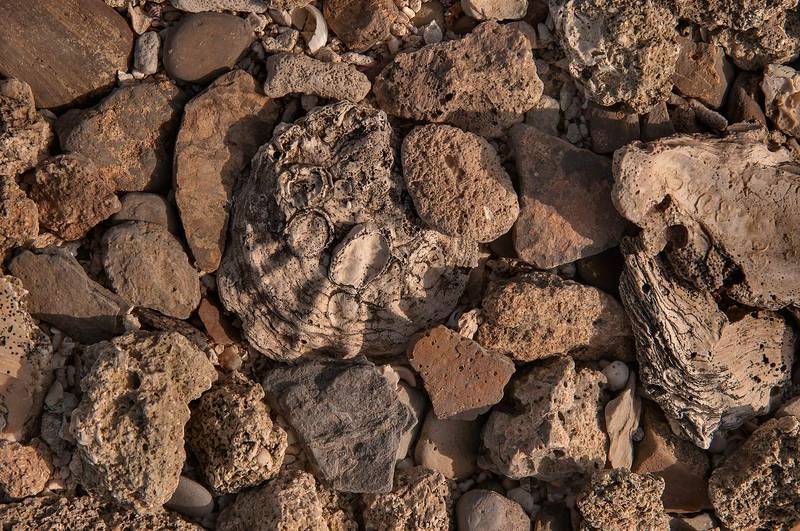

Fossilized oyster shells on a beach in western area of Haloul Island (Jazirat Halul). Qatar


Album 1194: Halul Island, Qatar, April 19, 2013
The image shows a collection of fossilized oyster shells scattered across a sandy or rocky surface. The oysters themselves appear to be quite large and have been weathered over time, with their shells now resembling rough, brownish-gray rocks rather than smooth, shiny shells.
There are several other objects in the image that can be seen alongside the oyster shells:
* Rocks: There are many smaller rocks visible among the oyster shells. These rocks vary in size and shape, but they all appear to be composed of a similar material to the oyster shells.
* Sand or dirt: The surface on which the oyster shells lie is not entirely clear from this image alone. However, it appears to be some sort of sandy or rocky terrain.
Overall, the image suggests that these fossils have been exposed due to erosion and are now lying scattered across a beach or other coastal area. It's likely that they were once buried beneath layers of sediment and have only recently emerged after being uncovered by natural forces such as tides or storms. – AI vision


