
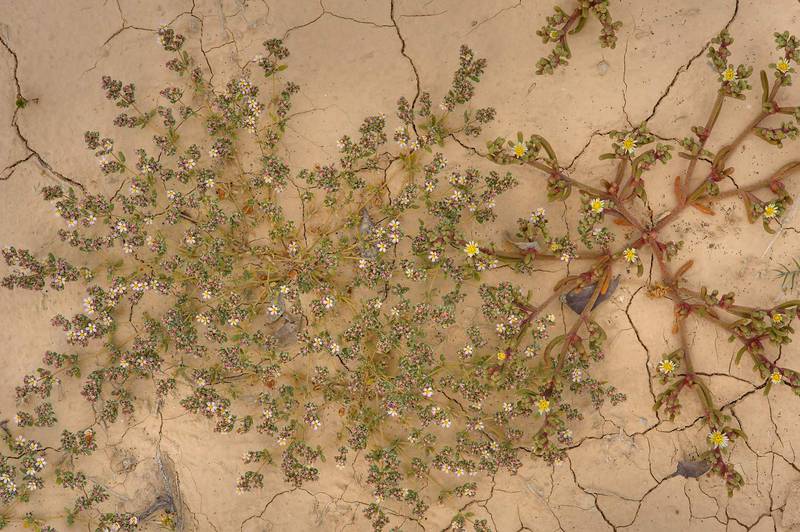

European seaheath (Frankenia pulverulenta) together with Egyptian Fig-marigold (slenderleaf ice plant, Mesembryanthemum nodiflorum) in abandoned farms in Ras Laffan. Northern Qatar


Album 1361: Plants in Ras Laffan farms, Qatar, February 28, 2014
This aerial photograph captures a striking scene of two desert plants thriving in an abandoned farm in Ras Laffan, northern Qatar. The image reveals a unique arrangement of European seaheath (Frankenia pulverulenta) and Egyptian Fig-marigold (slenderleaf ice plant, Mesembryanthemum nodiflorum), showcasing their ability to adapt and survive in arid environments.
The European seaheath, with its delicate white flowers on green stems, is scattered throughout the image. In contrast, the Egyptian Fig-marigold is more prominent, boasting yellow flowers that add a pop of color against the beige-colored cracked earth. The plants' slender leaves are visible as they stretch out across the barren landscape.
The background of the image features the cracked earth of the abandoned farm, which provides a stark contrast to the lush vegetation. The overall scene conveys resilience and determination, highlighting the ability of these desert plants to thrive in challenging conditions. – AI vision


