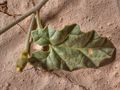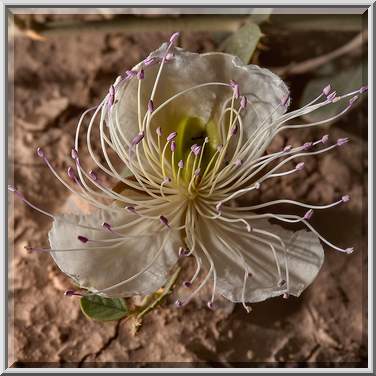
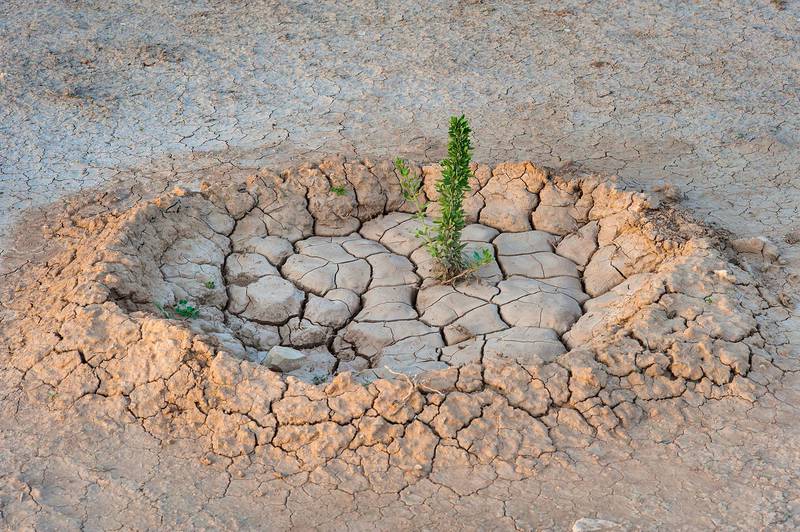

Lycium shawii planted in area of Uwaynat Bin Husayn (Water Well) near Simaisma. Qatar


Album 1395: Doha - Al Khor, Qatar, April 18, 2014
The image depicts a small plant growing in an arid environment. The plant is Lycium shawii, also known as the desert-thorn or wolfberry bush. It has a single stem with green leaves and no visible flowers or fruit.
The soil surrounding the plant is dry and cracked, indicating that it may be a water-scarce area. In the background, there are more cracks in the ground, suggesting that this is a very dry region.
The overall atmosphere of the image suggests that the plant has adapted to survive in harsh conditions, possibly due to its ability to store water in its leaves or roots.
In addition to the plant and soil, the image also shows some small rocks or pebbles scattered around the area. These may be helping to retain moisture in the soil or providing additional nutrients for the plant.
Overall, the image provides a glimpse into the challenges faced by plants growing in arid environments and highlights the importance of adaptation and resilience in these ecosystems. – AI vision