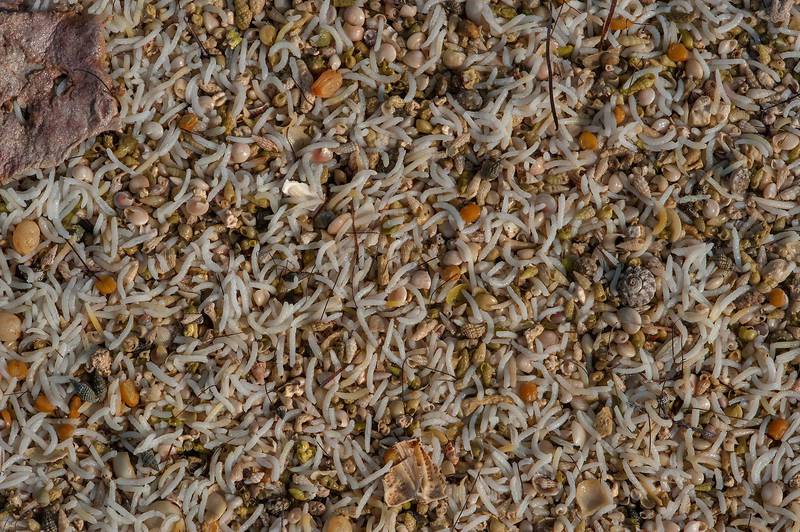

Masses of meat worms on a beach in Fuwairit. Northern Qatar


Album 1515: Doha - Fuwairit, Qatar, December 18 - 19, 2014
The image showcases a vast quantity of small, white worm-like creatures scattered across the sandy surface. The worms are densely packed and appear to cover every inch of the beach. They have no discernible legs or any other features, suggesting they may be newly hatched insects.
The presence of these worms on the beach indicates that they were likely washed up from the sea by high tide. This could indicate that the sea is experiencing a surge in population, which could be due to various factors such as changes in water temperature or an increase in food availability.
Overall, the image provides a striking visual representation of the abundance of these small creatures on the beach, highlighting their importance in the ecosystem and potentially shedding light on any underlying environmental trends. – AI vision