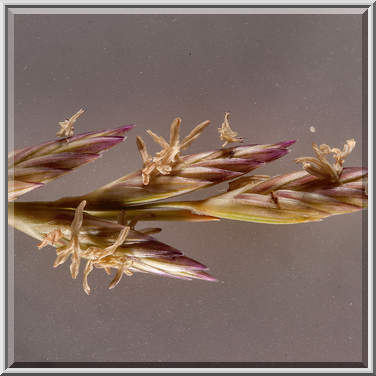
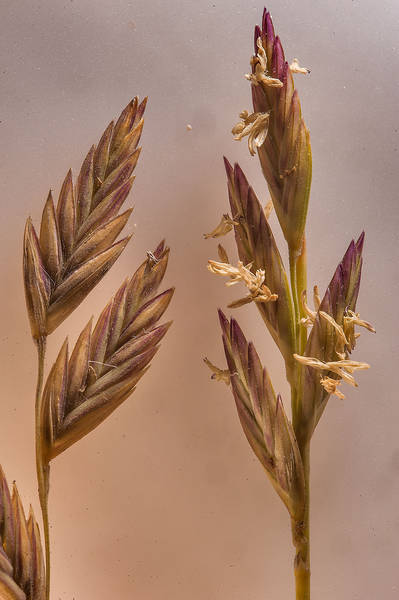
Spikelets of Halopyrum mucronatum grass in coastal dunes on beach in Marouna. Northern Qatar


Album 1516: Marouna - Doha, Qatar, December 19 - 23, 2014
This image presents a detailed view of spikelets from the Halopyrum mucronatum grass species, captured in its natural habitat on a beach in coastal dunes at Marouna, Qatar. The photograph was taken on December 19, 2014.
The spikelets, which are the primary reproductive units of the plant, display a striking arrangement and coloration. They are characterized by their feathery appearance, with elongated, pointed structures that resemble feathers or plumes. Each spikelet is approximately two to three centimeters in length and features a deep reddish-purple hue at its tip, gradually transitioning to green towards the base.
The background of the image appears as an ombre effect, with various shades of pink, purple, orange, and yellow that blend seamlessly into one another. This subtle gradient adds depth and texture to the overall composition.
This photograph showcases the intricate details and beauty of the Halopyrum mucronatum grass species in its natural environment, providing a unique insight into the plant's anatomy and habitat. – AI vision