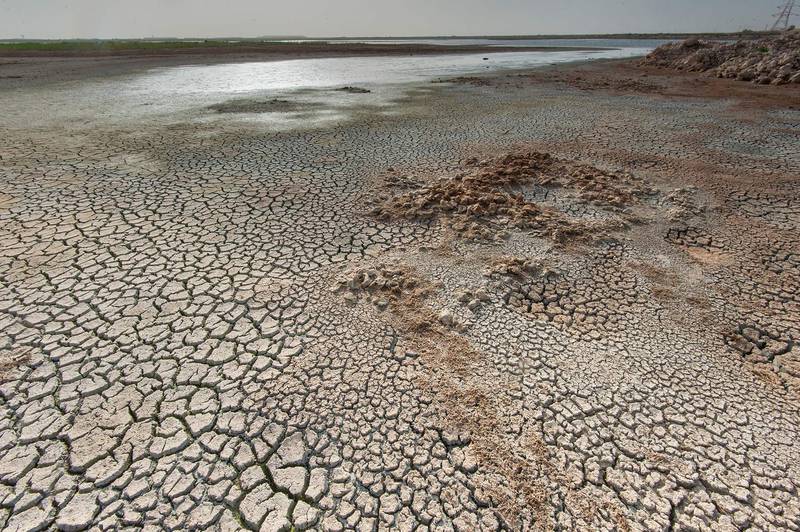

Drying Abu Nakhla jail ponds (sewage lagoons


Album 1581: Abu Nakhla sewage ponds, Qatar, April 18, 2015
The image shows a dry and cracked mud surface that appears to be the bed of a dried-up pond or lagoon. The cracks are very large and appear to resemble tree roots. There is some brown dirt on top of the white, cracked mud.
In the background, there is water at low tide with what looks like green grass in the distance.
The image shows Abu Nakhla Jail, which has sewage ponds that were dried up on April 18th, 2015, as part of a project to clean and improve the site. The drying process was done to prevent mosquitoes from breeding in the stagnant water, which could potentially spread diseases such as malaria and dengue fever.
The image suggests that the area is prone to flooding and has been affected by climate change, leading to increased rainfall and storm surges. However, it also shows the potential for regeneration and improvement through sustainable practices like drying out sewage ponds. – AI vision