
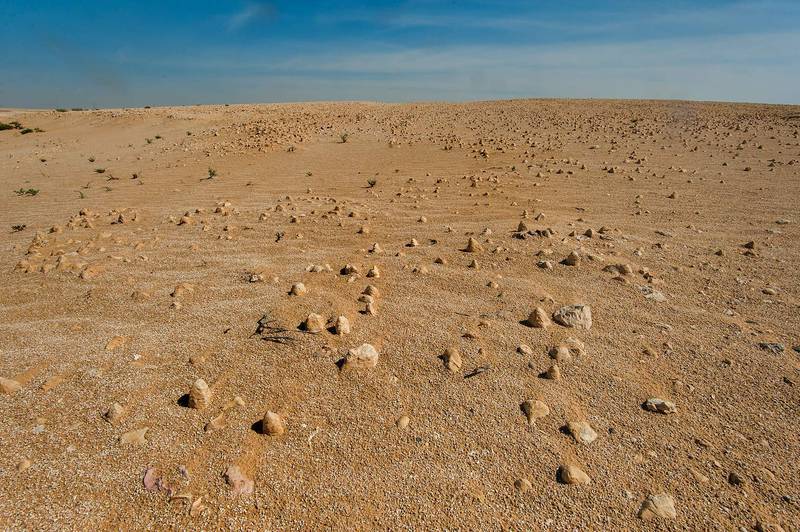

Conical fossilized stromatolites (marine microbs) in area of Jebel Al-Nakhsh in south-western Qatar


Album 1799: Southern Qatar, April 2, 2016
The image features a vast expanse of sandy dunes under a clear blue sky with only a few wispy clouds. The sand is light brown and dotted with small rocks that are scattered across the entire surface. In the distance, green shrubs can be seen on top of one of the dunes.
A closer look at the image reveals conical structures protruding from the sandy ground. These structures appear to be fossilized stromatolites, which were formed by ancient marine microorganisms (microbs). The presence of these fossils suggests that this area was once a shallow sea or lake bed where life thrived millions of years ago.
The image provides a unique glimpse into the geological history of Qatar and serves as evidence of its rich biodiversity. – AI vision


