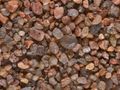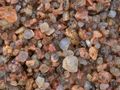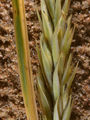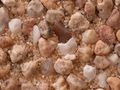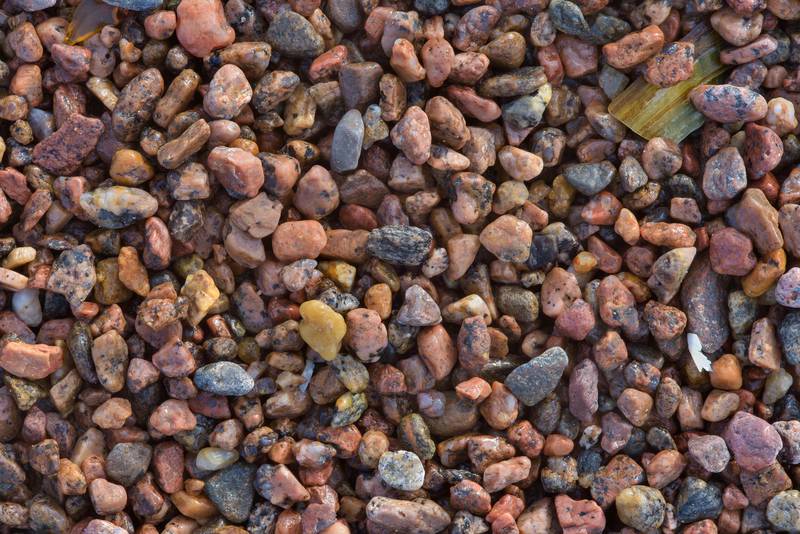

Course-grained sand on a beach in Solnechnoe, west from St.Petersburg. Russia


Album 1921: Solnechnoe - Sestroretsk, Russia, October 2, 2016
This image presents a close-up view of course-grained sand on a beach in Solnechnoe, located to the west of Saint Petersburg, Russia. The photograph was captured on October 2, 2016.
The sand is characterized by its predominantly brown hue, punctuated with specks of yellow and gray. It features an assortment of irregularly shaped grains, including rounded pebbles, smooth rocks, and elongated particles. These particles are scattered throughout the surface, creating a textured appearance that suggests they have been shaped by natural forces such as wind or water.
Upon closer inspection, it becomes apparent that the sand comprises a mix of minerals and organic matter. The presence of small rocks and pebbles indicates that the sand has likely been eroded from nearby geological formations over time. The smoothness of some grains implies that they may have undergone additional processing through glacial activity or other environmental processes.
The overall composition of the sand suggests a dynamic environment where sediment is constantly being transported and deposited by natural forces. This image provides a unique glimpse into the complex geology and ecology of this particular beach, highlighting the intricate relationships between landforms, water, and life that shape our planet's surface.
In summary, this photograph showcases the diverse textures and colors found in course-grained sand on a Russian beach, revealing the fascinating geological history and ongoing processes that have shaped this coastal environment. – AI vision
🇷🇺 Описание по-русски / Russian Description
Песчаная зернистая поверхность на пляже Солнечное к западу от Санкт-Петербурга. Россия, 2 октября 2016 г. Это изображение представляет собой увеличенный вид песчаной зернистой поверхности на пляже Солнечное, расположенном к западу от Санкт-Петербурга, Россия. Фотография была сделана 2 октября 2016 г. Песок характеризуется преимущественно коричневым оттенком, перемешанным с пятнышками желтого и серого цвета. На нем можно разглядеть множество зерен различной формы, в том числе круглые гальки, гладкие камушки и удлиненные частицы. Эти частицы рассеяны по поверхности, создавая текстурированный вид, который предполагает, что они были сформированы под действием природных сил, таких как ветер или вода. При ближайшем рассмотрении становится ясно, что песок состоит из набора минералов и органических частиц. Наличие небольших камешков указывает на то, что песок, вероятно, был разрушен близлежащими геологическими образованиями с течением времени. Сглаженность некоторых зерен предполагает, что они, возможно, подверглись дополнительной обработке посредством ледниковой или другой экологической активности. Общее со. – Russian translation