
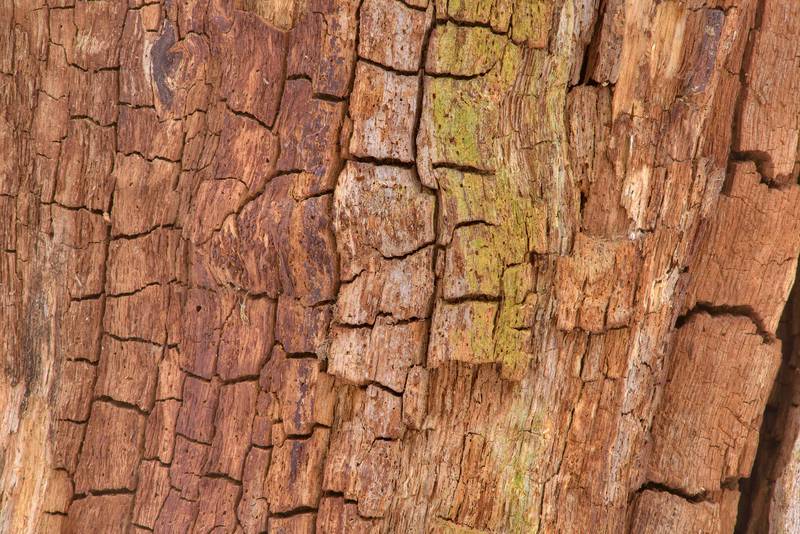

Texture of rotten oak near Lisiy Nos, west from St.Petersburg. Russia


Album 1988: Saint Petersburg - Lisiy Nos, Russia, February 12 - 18, 2017
The image presents a detailed close-up of a weathered tree trunk, showcasing its bark and texture. The wood exhibits a warm brown color with visible cracks and fissures, indicating significant wear due to exposure to environmental elements.
Upon closer inspection, it becomes apparent that the tree is an oak, as suggested by the caption. The presence of moss or lichen on the right side of the trunk adds to its natural appearance. The overall texture of the wood suggests that it has been exposed to harsh weather conditions for a considerable period.
The image likely captures a section of a larger tree, with the entire trunk potentially being affected by decay and rot. The close-up perspective allows the viewer to appreciate the intricate details of the bark's surface, including its ridges, grooves, and cracks.
In terms of composition, the image focuses solely on the weathered oak trunk, with no other elements present in the frame. This deliberate choice enables the viewer to concentrate on the textures and patterns within the wood, creating a sense of intimacy and connection with nature.
Overall, the image effectively conveys the idea that even seemingly robust structures like tree trunks can deteriorate over time due to environmental factors. The detailed close-up allows for an appreciation of the intricate textures and patterns present in the weathered oak trunk. – AI vision
🇷🇺 Описание по-русски / Russian Description
Текстура гнилой дубовой коры около Лисьего Носа, к западу от Санкт-Петербурга. Россия, 18 февраля 2017 года. На изображении представлен детальный крупный план состаренного ствола дерева, демонстрирующий его кору и текстуру. Дерево имеет теплый коричневый оттенок с видимыми трещинами и разломами, что указывает на значительный износ в результате воздействия элементов окружающей среды. При более пристальном рассмотрении становится очевидным, что это дуб, как следует из подписи. На правой стороне ствола растет мх или лишайник, который добавляет естественности виду. Текстура дерева позволяет предположить, что оно находилось в суровых климатических условиях в течение продолжительного времени. Вероятно, изображенная на фотографии часть ствола гораздо больше и может быть повреждена гниением или плесенью. Большой план перспективы позволяет увидеть интересные детали поверхности коры, включая ее гребни, борозды и трещины. В композиционном плане изображение содержит только ствол дуба без каких-либо других элементов в кадре. Такое решение позволяет зрителю сконцентрироваться на текстурах и рисунках древесины, создавая ощущение близости к природе. В целом, изображение передает мысль о том, что даже крепкие конструкции, такие как стволы деревьев, могут разрушаться с течением времени под воздействием погодных условий. Большой план перспективы позволяет рассмотреть интересные детали текстуры и рисунка на коре гнилого ствола дуба. – Russian translation


