
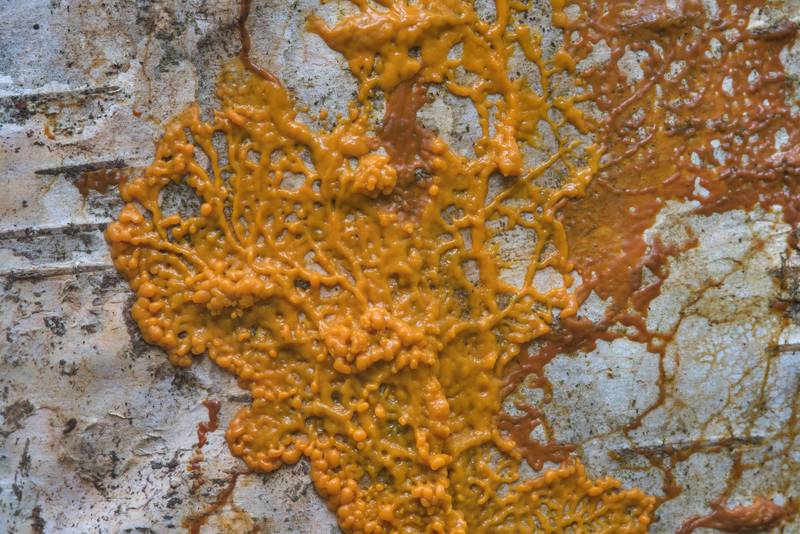
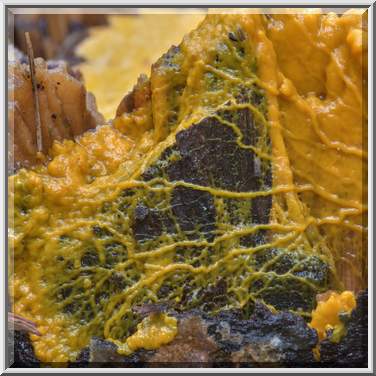
Orange plasmodium of many-headed slime mold Physarum polycephalum on a birch log in Sosnovka Park. St.Petersburg, Russia


Album 2154: Saint Petersburg, Russia, September 16, 2017
The image presents a close-up view of a birch log covered with an orange plasmodium of Physarum polycephalum, also known as many-headed slime mold. The main subject matter is the vibrant orange mass on the surface of the tree trunk.
**Subject Matter:**
* **Orange Plasmodium:** The prominent feature in the image is a large, irregularly shaped blob of orange material that appears to be oozing or dripping down the bark of the birch log. This substance is identified as the plasmodium of Physarum polycephalum.
* **Birch Log:** The background of the image features a light grayish-white color with darker brown streaks, indicative of the natural texture and coloration of a birch tree's bark.
**Composition:**
* **Dominant Color Scheme:** The primary colors visible in the image are shades of orange (ranging from light to dark) and various hues of gray and white.
* **Texture and Pattern:** The surface of the birch log exhibits a rough, uneven texture with numerous small cracks and crevices. The orange plasmodium has formed into irregularly shaped patches or streams that flow across the bark.
**Mood and Atmosphere:**
* **Natural Setting:** The image captures a moment in nature where an organism (Physarum polycephalum) is interacting with its environment. This interaction adds a sense of dynamism to the scene.
* **Focal Point:** The viewer's attention is drawn directly to the orange plasmodium, which dominates the visual space.
**Artistic Analysis:**
* **Composition and Framing:** There are no visible boundaries or edges within the frame, suggesting that this portion of the image represents a part of a larger scene. A wider angle would show more context about where these organisms reside.
* **Light Source:** Although not explicitly stated, it is assumed that natural light illuminates the scene, considering the realistic appearance and textures depicted.
**Conclusion:**
In conclusion, the image provides an intimate look at Physarum polycephalum thriving on a birch log. The vibrant orange color of the plasmodium contrasts beautifully against the muted tones of the tree bark, making for an intriguing visual study of nature's intricacies. – AI vision
🇷🇺 Описание по-русски / Russian Description
Оранжевое плазмодий многоглавого слизистого гриба Physarum polyceфalum на берёзовой древесине в парке Сосновка. Санкт-Петербург, Россия, 16 сентября 2017 года. На изображении демонстрируется крупный план на берёзовую древесину, покрытую оранжевым плазмодием Physarum polyceфalum, также известным как многоглавый слизистый гриб. Основной предмет - ярко-оранжевая масса на поверхности ствола дерева.
**Тема:** * **Оранжевое плазмодий:** Главной особенностью изображения является большое, неправильной формы пятно оранжевого вещества, которое выглядит так, словно оно стекает или капает по коре берёзовой древесины. Это вещество идентифицируется как плазмодий Physarum polyceфalum. * **Берёзовая древесина:** Фон изображения представляет собой светлый серышко-белый цвет с более тёмными коричневатыми полосами, характерный для естественной текстуры и окраски коры берёзы.
**Композиция:** * **Доминирующая цветовая гамма:** Основные видимые цвета на изображении - оттенки оранжевого (от светлого до тёмного) и различные оттенки серого и белого.
* **Текстура и рисунок:** Поверхность берёзовой древесины имеет грубую неровную текстуру со множеством мелких трещин и щелей. Оранжевое плазмодий образовало неправильные пятна или струи, протекающие по коре.
**Настроение и атмосфера:** * **Естественная обстановка:** Изображение запечатлевает момент в природе, когда организм (Physarum polyceфalum) находится во взаимодействии со средой. Это взаимодействие добавляет динамичности сцене.
* **Уклон сюжета:** Внимание зрителя привлекается непосредственно к оранжевому плазмодию, которое занимает большую часть визуального пространства.
**Художественный анализ:** * **Композиция и кадр:** На изображении нет четких границ или краёв в кадре, что даёт понять, что эта часть изображения является частью большей сцены. Широкоугольный ракурс показал бы больше контекста о том, где эти организмы находятся.
* **Источник света:** Хотя и не указано открыто, можно предположить, что естественный свет освещает изображение, принимая во внимание реалистичный вид и текстуры, показанные.
**Заключение:** В заключении, на изображении представлен близкий вид Physarum polyceфalum, процветающего на берёзовой древесине. Ярко-оранжевый цвет плазмодия контрастирует красиво с приглушёнными тонами коры дерева, образуя интересное визуальное исследование сложностей природы. – Russian translation


