 |
| |||||||||||||||

| ||||||||||||||||


| Similar |   |
  |
  |
  |
  |
| |||||||||||||||||||||||||||
| |||||||||||||||||||||||||||
| 1996 1997 1998 1999 2000 2001 2002 2003 2004 2005 2006 2007 2008 2009 2010 2011 2012 2013 2014 2015 2016 2017 2018 2019 2020 2021 2022 2023 2024 2025 2026 | |||||||||||||||||||||||||||
| New version Slide Show Most Popular Full List Statistics Technical Details Home Page | |||||||||||||||||||||||||||
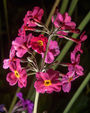
The vibrant flowers of the Japanese jacinth (Barnardia japonica) were captured in all their glory at the Botanic Gardens of Komarov Botanical Institute in Saint Petersburg, Russia, on October 4, 2017. The delicate petals and striking colors create a breathtaking sight, adding beauty to the already stunning surroundings of the gardens. – generated by AI |
The image presents a close-up view of the flowers of Barnardia japonica, commonly known as Japanese jacinth. The photograph was taken at the Botanic Gardens of Komarov Botanical Institute in Saint Petersburg, Russia on October 4, 2017. In the foreground, the flowers are prominently displayed against a dark background. The main subject is a purple flower that appears to be part of a larger inflorescence or spikelet. The flower has five petals and numerous stamens, which give it a distinctive appearance. The coloration of the flower suggests that it may be in full bloom. The overall composition of the image emphasizes the beauty and intricacy of the Japanese jacinth's flowers. The dark background serves to highlight the vibrant purple hue of the blooms, drawing the viewer's attention to their delicate details. The use of a macro lens or close-up photography technique allows for an intimate examination of the flower's structure. In terms of composition, the image features a single point of focus - the Japanese jacinth flower - which is positioned centrally in the frame. This creates a sense of balance and harmony, with no distracting elements to detract from the subject matter. The dark background also helps to create depth and dimensionality, making the flowers appear more three-dimensional. The lighting in the image appears to be soft and even, possibly achieved using artificial light sources or carefully controlled natural light. This type of illumination is ideal for capturing fine details and textures, especially when photographing delicate subjects like flowers. Overall, the image effectively showcases the beauty and uniqueness of the Japanese jacinth's flowers, highlighting their intricate structure and vibrant coloration. The composition, lighting, and technical aspects all work together to create a visually appealing and informative image that would be suitable for use in botanical or horticultural contexts. – AI vision |
Цветы японской джейчины (Barnardia japonica) в Ботаническом саду Комаровского ботанического института. Санкт-Петербург, Россия, 4 октября 2017 года. На изображении представлен крупный план цветов Barnardia japonica, широко известной как японская джейчина. Фотография была сделана в Ботаническом саду Комаровского ботанического института в Санкт-Петербурге, Россия 4 октября 2017 года. На переднем плане цветы четко выделяются на темном фоне. Главным объектом является фиолетовый цветок, являющийся частью крупного соцветия или колосовидной структуры. У этого цветка пять лепестков и многочисленные тычинки, которые придают ему характерный внешний вид. Окраска цветка предполагает, что он находится в периоде полного расцвета. Общая композиция изображения подчеркивает красоту и сложность цветов японской джейчины. Темный фон служит для того, чтобы высветить ярко-фиолетовый оттенок распустившихся цветков, привлекая внимание зрителя к мельчайшим подробностям их структуры. Использование макрообъектива или техники сфокусированной фотографии позволяет детально рассмотреть строение цветка. В плане композиции изображение содержит одну точку фокуса - цветок японской джейчины, расположенный в центре кадра. Это создает ощущение равновесия и гармонии, без отвлекающих элементов, которые могли бы отвлечь внимание зрителя от предмета изображения. Темный фон также способствует формированию глубины и объема, делая цветы более трехмерными. Изображение светлое и ровное; возможно, это было достигнуто при использовании источников искусственного или тщательно контролируемого естественного света. Такая подсветка идеальна для запечатления мелких деталей и текстур, особенно при съемке хрупких предметов вроде цветов. В целом, изображение эффектно показывает красоту и неповторимость цветков японской джейчины, подчеркивая их сложную структуру и яркую окраску. Композиция, освещение и технические аспекты работают вместе для создания визуально привлекательного и познавательного изображения, которое будет уместно использовать в ботанических или садоводческих публикациях. – Russian translation |
| [+] | japanese garden |
Keyword variants
Botanical Garden of the V.L. Komarov Institute of the Russian Academy of Sciences
high resolution online digital collection
St. Petersburg picture show
Saint Petersburg Botanical Garden
2 Ulitsa Professora Popova
St. Pete's
Botanic Garden photo
Apothecary's Garden
Soviet Union
Sankt Peterburg
Saint-Petersbourg
Russian Federation
Rossiya foto
picture gallery
photo album
Petrograd side
Leningrad fotosnimki
landscape park
Korablestroitelely Street
Karpovka River
former USSR
flower head
documentary photographs
daily pics
Botanical Museum
Botanical collections
Aptekarsky Island
Aptekarskii Island
Venemaa
Venaja
travelogue
SPb
snimki
snapshots
sightseeing
Ryssland
Rwsia
Ruthenia
Rusya
Rusujo
Russland
Russja
Russie
Russi
Ruslando
Rusland
Rusko
Rusio
Rusija
Rusii
Rusia
Roushie
Rosya
Rosland
Rosia
Roshia
Raseja
Piter
Pietari
photowalks
photoblog
Petrogradskaya
Orussiya
Oroszorszag
Lenjingrad
Japanes
institue
graphic
fotografias
fotki
floret
floral
Errusia
blossom
bloom
arboretum