 |
| |||||||||||||||||

| ||||||||||||||||||


| Similar | 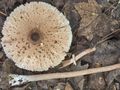  |
  |
  |
  |
  |
| |||||||||||||||||||||||||||||
| |||||||||||||||||||||||||||||
| 1996 1997 1998 1999 2000 2001 2002 2003 2004 2005 2006 2007 2008 2009 2010 2011 2012 2013 2014 2015 2016 2017 2018 2019 2020 2021 2022 2023 2024 2025 2026 | |||||||||||||||||||||||||||||
| New version Slide Show Most Popular Full List Statistics Technical Details Home Page | |||||||||||||||||||||||||||||
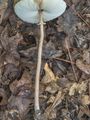
The gills of the parasol mushroom Macrolepiota procera, photographed on Caney Creek Trail (Little Lake Creek Loop Trail) in Sam Houston National Forest near Huntsville, Texas, display a striking feature on September 15, 2018. These delicate, fan-shaped gills are a distinctive characteristic of this species, adding to its unique appearance and distinguishing it from other mushroom varieties. – generated by AI |
The image features a close-up view of the underside of a parasol mushroom's cap, showcasing its distinctive gills and stem. The cap itself is not visible, as it has been turned over to expose the gills underneath. The gills are white with slight brownish tints at their base, where they meet the stem. They are tightly packed together, resembling an almost solid layer of tissue. This arrangement allows for a more efficient distribution of spores during reproduction. The mushroom's stem is light-colored and slender, contrasting with the darker hues of the surrounding leaves. The background consists mainly of brown fallen leaves on the forest floor, providing a natural setting for this wild mushroom to grow. Overall, the image offers a detailed look at the parasol mushroom's unique characteristics, highlighting its gills as a key feature in its life cycle and growth process. – AI vision |
Los lóbulos de un hongo sombrilla Macrolepiota procera en el Caney Creek Trail (Little Lake Creek Loop Trail) en la Sam Houston National Forest, cerca de Huntsville, Texas, el 15 de septiembre de 2018. La imagen muestra una vista detallada de la parte inferior del sombrero del hongo, mostrando sus distintivos lóbulos y tallo. El propio sombrero no se ve, ya que se ha dado la vuelta para exponer los lóbulos debajo. Los lóbulos son de color blanco con un ligero tinte parduzco en su base, donde se unen al tallo. Están muy juntos y parecen una capa casi sólida de tejido. Esta disposición permite una distribución más eficiente de las esporas durante la reproducción. El tallo del hongo es claro y delgado, en contraste con los colores oscuros de las hojas circundantes. El fondo consiste principalmente en hojas caídas marrones sobre el suelo del bosque, proporcionando un entorno natural para que crezca este hongo silvestre. En general, la imagen ofrece una mirada detallada a las características únicas del hongo sombrilla, destacando sus lóbulos como una parte clave en su ciclo de vida y proceso de crecimiento. – Spanish translation |
Keyword variants
high resolution online digital collection
Little Lake online image
Lake Creek Loop photo
Houston National Forest snapshot
Creek Loop Trail photos
Caney Creek Trail grafika
Lone Star State
United States
picture gallery
photo album
documentary photographs
daily pics
TX
travelogue
snapshots
sightseeing
photowalks
photoblog
littel
graphic
fungus
fungi
fotografias
foto
America