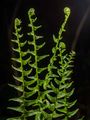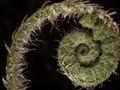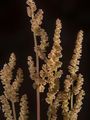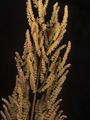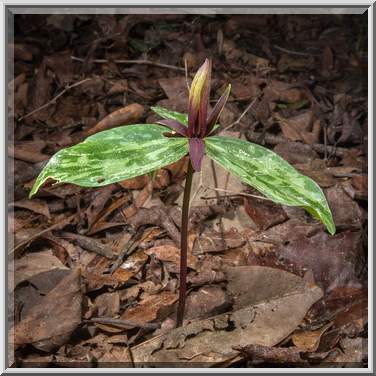
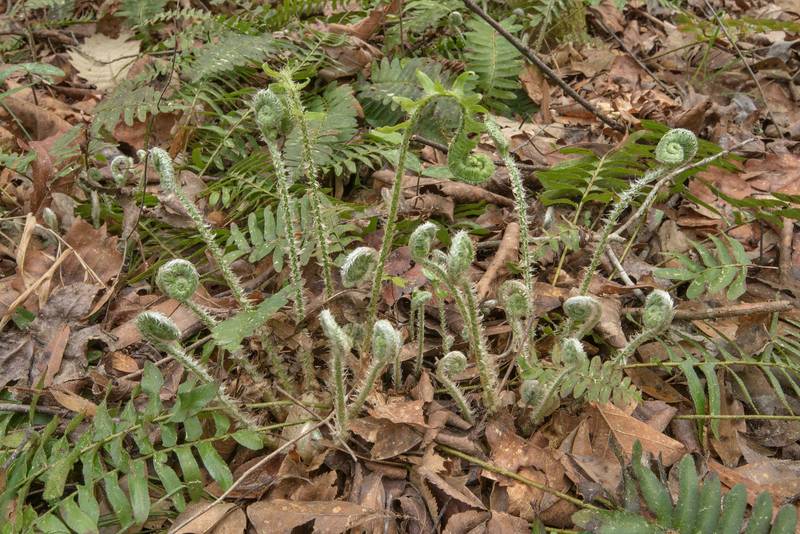
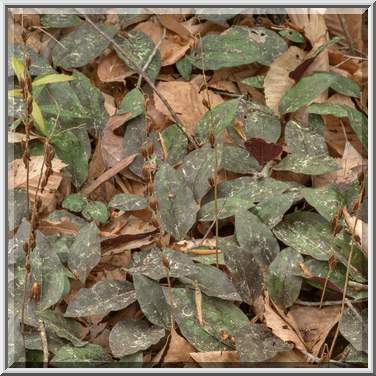
Christmas fern (Polystichum acrostichoides) in Big Creek Scenic Area of Sam Houston National Forest. Shepherd, Texas


Album 2461: Sam Houston Forest, Coldspring, Texas, March 10, 2019
The image showcases a cluster of young, green Christmas ferns sprouting from the forest floor amidst a carpet of dead leaves and twigs. The Christmas ferns are characterized by their upright growth habit, bearing long, narrow fronds that resemble those of other fern species but have a distinctive white fringe along their margins. This unique feature is typical of the Christmas fern genus (Polystichum) and can be used to identify it.
The forest floor beneath the ferns is littered with dead leaves and twigs, which are common in forests during winter months. These organic materials help maintain soil quality by decomposing over time, while also providing habitat for various organisms such as insects, fungi, and microorganisms.
In the background of the image, a small patch of dirt or sand can be seen between two larger patches of leaves. This suggests that the forest floor is being gradually reclaimed by vegetation following recent disturbances or disturbances to the soil structure.
Overall, the image provides a glimpse into the natural history of Sam Houston National Forest in Texas during late winter. It highlights the resilience and adaptability of plant species like Christmas ferns in these ecosystems, as well as the importance of preserving and maintaining healthy forest habitats for biodiversity conservation efforts. – AI vision
🇪🇸 Descripción en español / Spanish Description
El helecho de Navidad (Polystichum acrostichoides) en el Área Escénica Big Creek del Bosque Nacional Sam Houston. Shepherd, Texas, 10 de marzo de 2019. La imagen muestra un grupo de helechos de Navidad jóvenes y verdes que brotan desde el suelo del bosque entre una alfombra de hojas secas y ramitas. Los helechos de Navidad se caracterizan por su hábitat de crecimiento erecto, con largos pelos estrechos que recuerdan a los de otras especies de helechos pero tienen un borde blanco distintivo a lo largo de sus márgenes. Esta característica única es típica del género helecho de Navidad (Polystichum) y se puede usar para identificarlos. El suelo bajo los helechos está cubierto de hojas secas y ramitas, lo que es común en los bosques durante los meses de invierno. Estos materiales orgánicos ayudan a mantener la calidad del suelo al descomponerse con el tiempo, al mismo tiempo que proporcionan hábitat para diversos organismos como insectos, hongos y microorganismos. En segundo plano de la imagen, se puede ver un pequeño parche de tierra o arena entre dos parches más grandes de hojas. Esto sugiere que el suelo del bosque está siendo recuperado gradualmente por la vegetación después de perturbaciones recientes o perturbaciones en la estructura del suelo. En general, la imagen proporciona un vistazo a la historia natural del Bosque Nacional Sam Houston en Texas durante el final del invierno. Destaca la resiliencia y adaptabilidad de especies vegetales como los helechos de Navidad en estos ecosistemas, así como la importancia de preservar y mantener hábitats forestales saludables para los esfuerzos de conservación de la biodiversidad. – Spanish translation