 |
| |||||||||||||||||

| ||||||||||||||||||


| Similar |   |
  |
  |
  |
  |
| |||||||||||||||||||||||||||||
| |||||||||||||||||||||||||||||
| 1996 1997 1998 1999 2000 2001 2002 2003 2004 2005 2006 2007 2008 2009 2010 2011 2012 2013 2014 2015 2016 2017 2018 2019 2020 2021 2022 2023 2024 2025 2026 | |||||||||||||||||||||||||||||
| New version Slide Show Most Popular Full List Statistics Technical Details Home Page | |||||||||||||||||||||||||||||
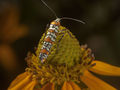
In the David E. Schob Nature Preserve at 906 Ashburn Street in College Station, Texas, a unique sight can be observed - the Ailanthus webworm (Atteva punctella) feeding on the oate-flowering boneset (Eupatorium serotinum). This phenomenon was captured on camera on September 6, 2019. – generated by AI |
The image shows a close-up view of an insect on top of a flowering plant with white flowers and green leaves. The insect is likely an Ermine moth Ailanthus webworm (Atteva punctella). It has distinctive black antennae that are long and slender, extending well beyond the rest of its body. Its body is primarily orange in color, featuring large yellow spots on top of it. Its abdomen displays a striking pattern of black and white splotches. The insect appears to be resting atop a flowering plant, possibly feeding on its nectar or pollen. The plant itself boasts vibrant white flowers that resemble small puffs or pom-poms. They are clustered together in groups at the end of long green stems, creating a visually appealing display. A few of these flower clusters can be seen in the background of the image. A partial view of an orange insect is visible in the lower left corner, although it is not clear what type of insect this is or if it is related to the main subject of the photo. In summary, the image depicts a striking Ermine moth Ailanthus webworm perched on top of a flowering plant with white flowers and green leaves. The insect's vibrant orange body features yellow spots and black-and-white splotches on its abdomen. The surrounding environment is characterized by clusters of small puffs or pom-poms, likely representing the same type of flower as the one being utilized by the insect for sustenance. – AI vision |
La polilla ermitaño del Ailanthus (Atteva punctella) o el huespedero florido del Eupatorio (Eupatorium serotinum) en la reserva natural David E. Schob en 906 Ashburn Street, College Station, Texas, el 6 de septiembre de 2019. La imagen muestra una vista detallada de un insecto sobre una planta florida con flores blancas y hojas verdes. Es probable que el insecto sea una polilla ermitaño del Ailanthus (Atteva punctella). Tiene antenas negras distintivas, largas y delgadas, que se extienden mucho más allá del resto de su cuerpo. Su cuerpo es principalmente de color naranja, con grandes manchas amarillas encima. Su abdomen presenta un patrón sorprendente de motas negras y blancas. El insecto parece estar descansando sobre una planta florida, posiblemente alimentándose de su néctar o polen. La planta en sí mismo muestra flores blancas que recuerdan a pequeños mechones o pompones. Están agrupadas en grupos al final de largos tallos verdes, creando una imagen atractiva para la vista. Se pueden observar algunos de estos racimos florales en el fondo de la imagen. Es visible una vista parcial de un insecto naranja en la esquina inferior izquierda, aunque no está claro qué tipo de insecto es o si está relacionado con el tema principal de la foto. En resumen, la imagen muestra a una sorprendente polilla ermitaño del Ailanthus perchada sobre una planta florida con flores blancas y hojas verdes. El cuerpo del insecto, vibrante naranja, presenta manchas amarillas y un patrón de motas negras y blancas en su abdomen. El entorno circundante se caracteriza por racimos pequeños que recuerdan a mechones o pompones, probablemente representando el mismo tipo de flor que la utilizada por el insecto como fuente de sustento. – Spanish translation |
| [+] | texas moths | |
| [+] | september flowers | |
| [+] | moth |
Keyword variants
high resolution online digital collection
Schob Nature Preserve shot
Berlin on the Brazos
Lone Star State
United States
picture gallery
photo album
documentary photographs
daily pics
conservative town
Brazos County
Ashburn St.
TX
travelogue
snapshots
sightseeing
photowalks
photoblog
graphic
fotografias
foto
Bryan
America
Aggieland