 |
| |||||||||||||||||

| ||||||||||||||||||


| Similar |   |
  |
  |
  |
  |
| |||||||||||||||||||||||||||||
| |||||||||||||||||||||||||||||
| 1996 1997 1998 1999 2000 2001 2002 2003 2004 2005 2006 2007 2008 2009 2010 2011 2012 2013 2014 2015 2016 2017 2018 2019 2020 2021 2022 2023 2024 2025 2026 | |||||||||||||||||||||||||||||
| New version Slide Show Most Popular Full List Statistics Technical Details Home Page | |||||||||||||||||||||||||||||
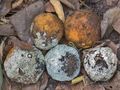
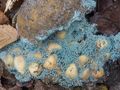
Fungal growths known as green mould can be seen on fallen fruits of trifoliate oranges along the Caney Creek Trail (Little Lake Creek Loop Trail) in Sam Houston National Forest, located north of Montgomery, Texas. This specific type of mould is caused by the fungus Penicillium digitatum and was observed on December 1st, 2019. – generated by AI |
The photograph presents a close-up view of two fallen orange fruits, likely from a trifoliate orange tree (Poncirus trifoliata), situated on a forest floor covered with dry leaves and twigs. The fruit is characterized by its thick brown skin, which appears to be cracking open, revealing the orange flesh underneath. The most striking feature of this image is the blue mould that has developed on the surface of the fruit. This mould is caused by the fungus Penicillium italicum, a common agent of postharvest decay in citrus fruits. The presence of the mould suggests that the fruit may have been exposed to high humidity and warmth for an extended period, creating an ideal environment for the growth of this type of fungus. The background of the image consists of dry leaves and twigs scattered across the forest floor. These organic materials appear to be decomposing slowly, providing a nutrient-rich substrate for microorganisms such as fungi to thrive. The overall scene captures a snapshot of the natural process of decomposition in a forest ecosystem, where dead plant material is broken down by various organisms into simpler compounds that can be reused by other living organisms. In summary, this image presents a detailed view of two fallen trifoliate orange fruits covered with blue mould caused by Penicillium italicum. The background consists of dry leaves and twigs scattered across the forest floor, highlighting the ongoing process of decomposition in this ecosystem. – AI vision |
Moho azul causado por el hongo Penicillium italicum en frutas caídas de naranjo trifoliada en el Sendero del Arroyo Caney (Sendero del Bucle del Arroyo Pequeño Lago) en la Selva Nacional Sam Houston al norte de Montgomery, Texas. 1 de diciembre de 2019. La fotografía presenta una vista cercana de dos frutas de naranjo caídas, probablemente de un naranjo trifoliado (Poncirus trifoliata), situadas en el suelo cubierto con hojas secas y ramitas. El fruto se caracteriza por su piel marrón gruesa, que parece romperse al abrirse, revelando la pulpa naranja debajo. La característica más destacada de esta imagen es el moho azul que ha desarrollado en la superficie del fruto. Este moho está causado por el hongo Penicillium italicum, un agente común de la descomposición posterior a la cosecha en los cítricos. La presencia del moho sugiere que el fruto puede haber estado expuesto a humedad y calor elevados durante un periodo prolongado, creando un entorno ideal para el crecimiento de este tipo de hongos. El fondo de la imagen consiste en hojas secas y ramitas dispersadas por el suelo del bosque. Estos materiales orgánicos parecen estar descomponiéndose lentamente, proporcionando un sustrato rico en nutrientes para que los microorganismos como los hongos puedan prosperar. La escena global captura una instantánea del proceso natural de descomposición en un ecosistema forestal, donde el material vegetal muerto se rompe por varios organismos en compuestos más simples que pueden ser reutilizados por otros organismos vivos. En resumen, esta imagen presenta una vista detallada de dos frutas de naranjo trifoliado caídas cubiertas con moho azul causado por Penicillium italicum. El fondo consiste en hojas secas y ramitas dispersadas por el suelo del bosque, destacando el proceso continuo de descomposición en este ecosistema. – Spanish translation |
| [+] | orange fruits | |
| [+] | texas fruits | |
| [+] | green fruits |
Keyword variants
high resolution online digital collection
Creek Loop Trail web graphics
Lake Creek Loop photos
Houston National Forest picture
Caney Creek Trail images
Lone Star State
Little Lake pix
United States
picture gallery
photo album
documentary photographs
daily pics
TX
travelogue
snapshots
sightseeing
photowalks
photoblog
littel
graphic
fotografias
foto
America