 |
| |||||||||||||||||

| ||||||||||||||||||


| Similar |   |
  |
  |
  |
  |
| |||||||||||||||||||||||||||||
| |||||||||||||||||||||||||||||
| 1996 1997 1998 1999 2000 2001 2002 2003 2004 2005 2006 2007 2008 2009 2010 2011 2012 2013 2014 2015 2016 2017 2018 2019 2020 2021 2022 2023 2024 2025 2026 | |||||||||||||||||||||||||||||
| New version Slide Show Most Popular Full List Statistics Technical Details Home Page | |||||||||||||||||||||||||||||
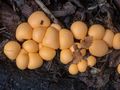
The Lycogala epidendrum, commonly known as the wolf's milk slime mold, was spotted thriving on an oak log along the Kiwanis Nature Trail in College Station, Texas on March 25th, 2020. Its unique, slimy appearance is a result of its life cycle, which transitions from a single-celled amoeba to a multicellular organism before eventually producing spores. This fascinating species is a testament to the diversity and resilience of life on our planet. – generated by AI |
The image presents a close-up view of the Wolf's Milk Slime Mold (Lycogala epidendrum), showcasing its vibrant orange hue and unique structure. * **Color:** The slime mold exhibits an intense orange color. The Wolf's Milk Slime Mold is a type of plasmodial slime mold belonging to the Myxomycetes class. This species is characterized by its bright orange color and ability to produce spores. It typically grows on decaying wood, such as that found on oak logs. The image suggests that this particular specimen has formed clusters on an oak log in College Station, Texas, likely due to favorable environmental conditions. The Wolf's Milk Slime Mold plays a crucial role in the ecosystem by breaking down organic matter and recycling nutrients. It is also an important food source for various animals, such as insects and small mammals. In conclusion, the image provides a detailed view of the Wolf's Milk Slime Mold, highlighting its distinctive color and structure. Its presence on oak logs underscores its ecological significance and importance in the ecosystem. *Answer*: The image depicts the Wolf's Milk Slime Mold (Lycogala epidendrum) growing on an oak log in College Station, Texas. – AI vision |
El moho del lechoso de lobos (Lycogala epidendrum) en un tronco de roble en el camino natural Kiwanis. Estación de Colegios, Texas, 25 de marzo de 2020. La imagen presenta una vista cercana del moho del lechoso de lobos (Lycogala epidendrum), mostrando su tono naranja vibrante y su estructura única. **Color**: El moho presenta un color naranja intenso. **Estructura**: Parece como pequeñas bolas o burbujas redondas agrupadas juntas. Estos grupos pueden estar unidos a la superficie de un tronco de roble en el fondo. El moho del lechoso de lobos es un tipo de moho líquido plasmodial que pertenece a la clase Myxomycetes. Esta especie se caracteriza por su color naranja brillante y su capacidad para producir esporas. Crece normalmente en madera en descomposición, como el encontrado en troncos de roble. La imagen sugiere que este espécimen en particular ha formado grupos en un tronco de roble en College Station, Texas, debido a las condiciones ambientales favorables. El moho del lechoso de lobos juega un papel crucial en el ecosistema al descomponer la materia orgánica y reciclar los nutrientes. También es una fuente importante de alimento para varios animales, como insectos y pequeños mamíferos. En conclusión, la imagen proporciona una vista detallada del moho del lechoso de lobos, resaltando su color y estructura distintivos. Su presencia en troncos de roble subraya su significado ecológico y su importancia en el ecosistema. *Respuesta*: La imagen muestra el moho del lechoso de lobos (Lycogala epidendrum) creciendo en un tronco de roble en College Station, Texas. – Spanish translation |
| [+] | nature in march | |
| [+] | wolf |
Keyword variants
high resolution online digital collection
Kiwanis Nature Trail pics
Berlin on the Brazos
Lone Star State
United States
picture gallery
photo album
documentary photographs
daily pics
conservative town
Brazos County
TX
travelogue
snapshots
sightseeing
photowalks
photoblog
graphic
fotografias
foto
Bryan
America
Aggieland