 |
| |||||||||||||||||

| ||||||||||||||||||


| Similar | 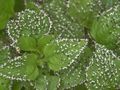  |
  |
  |
  |
  |
| |||||||||||||||||||||||||||||
| |||||||||||||||||||||||||||||
| 1996 1997 1998 1999 2000 2001 2002 2003 2004 2005 2006 2007 2008 2009 2010 2011 2012 2013 2014 2015 2016 2017 2018 2019 2020 2021 2022 2023 2024 2025 2026 | |||||||||||||||||||||||||||||
| New version Slide Show Most Popular Full List Statistics Technical Details Home Page | |||||||||||||||||||||||||||||
A close-up image of the slime mold Diachea leucopodia thriving on a leaf of Calyptocarpus vialis is captured in this photograph, taken on March 30, 2020, in Wolf Pen Creek Park, College Station, Texas. The intricate details of the slime mold's texture and color are visible, showcasing its unique biology. – generated by AI |
The image presents a close-up view of slime mold Diachea leucopodia growing on the leaves of Calyptocarpus vialis in Wolf Pen Creek Park, College Station, Texas, taken on March 30th, 2020. Upon closer inspection, it is evident that the slime mold has created small white, cotton-like structures (mycelium) on the leaf. These mycelia are covered with dark brown spores (sporophores), which appear as tiny black dots along the edges of the mycelium. The overall appearance suggests a symbiotic relationship between the slime mold and the plant. The slime mold Diachea leucopodia is known to be saprotrophic, meaning it obtains its nutrients by breaking down organic matter in soil or decaying wood. In this context, it is likely that the slime mold has formed these structures on the leaf of Calyptocarpus vialis in order to absorb nutrients from the plant. The background of the image is blurred, making it difficult to discern any other details beyond the immediate vicinity of the slime mold growth. However, based on the information provided in the caption, it can be inferred that the image was taken in a natural setting, possibly during a field study or observation of fungal ecology. – AI vision |
Primer plano del hongo esclerodiado Diachea leucopodia en una hoja de Calyptocarpus vialis en Wolf Pen Creek Park. College Station, Texas, el 30 de marzo de 2020. La imagen presenta una vista de primer plano del hongo esclerodiado Diachea leucopodia que crece sobre las hojas de Calyptocarpus vialis en Wolf Pen Creek Park, College Station, Texas, tomada el 30 de marzo de 2020. Al inspeccionarlo con más detenimiento, es evidente que el hongo ha creado pequeñas estructuras blancas y parecidas a algodón (micelio) sobre la hoja. Estos micelios están cubiertos con esporoforos marrones oscuros (esporóforos), que aparecen como pequeños puntos negros a lo largo de los bordes del micelio. El aspecto general sugiere una relación simbiótica entre el hongo y la planta. Se sabe que el hongo esclerodiado Diachea leucopodia es saprotrófico, lo que significa que obtiene sus nutrientes al degradar materia orgánica en suelo o madera en descomposición. En este contexto, es probable que el hongo haya formado estas estructuras sobre la hoja de Calyptocarpus vialis para absorber nutrientes de la planta. El fondo de la imagen está borroso, lo que dificulta distinguir otros detalles más allá del entorno inmediato del crecimiento del hongo. Sin embargo, basándose en la información proporcionada en el pie de foto, se puede inferir que la imagen fue tomada en un entorno natural, posiblemente durante un estudio o observación de campo de la ecología micótica. – Spanish translation |
| [+] | wolf pen creek park | |
| [+] | wolf pen creek college station | |
| [+] | wolf pen creek |
Keyword variants
high resolution online digital collection
Pen Creek Park grafika
Berlin on the Brazos
Lone Star State
United States
picture gallery
photo album
documentary photographs
daily pics
conservative town
Brazos County
TX
travelogue
snapshots
sightseeing
photowalks
photoblog
graphic
fotografias
foto
Bryan
America
Aggieland