
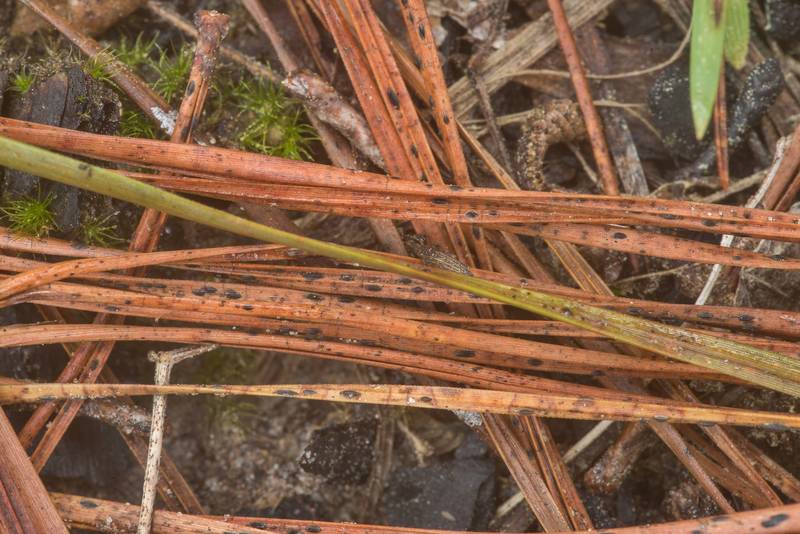

Black spots of fungus Lophodermium (Rhytismataceae) on fallen pine needles on Richards Loop Trail in Sam Houston National Forest. Texas


Album 2681: Sam Houston Forest, Texas, April 6, 2020
The image depicts a close-up view of fallen pine needles scattered on the ground, with black spots visible on some of them. The pine needles are brown and appear to be dry, suggesting they have been on the ground for some time. They are scattered across the surface, overlapping each other in places.
**Key Features:**
* **Black Spots:** Small, dark spots are visible on some of the pine needles. These spots are likely caused by a fungus called Lophodermium (Rhytismataceae), which is known to infect pine needles and cause them to turn black.
* **Pine Needles:** The pine needles are brown and dry, indicating they have been on the ground for some time. They are scattered across the surface, overlapping each other in places.
* **Background:** The background of the image appears to be a forest floor or trail, with twigs, leaves, and other debris visible beneath the pine needles.
**Overall Impression:**
The image suggests that the pine needles have been on the ground for some time, possibly due to disease or insect infestation. The presence of black spots on some of the needles indicates that they may be infected with a fungus such as Lophodermium. Overall, the image provides a detailed view of the forest floor and highlights the importance of monitoring plant health in natural environments. – AI vision
🇪🇸 Descripción en español / Spanish Description
Hay manchas negras de hongos Lophodermium (Rhytismataceae) en las agujas de pino caídas del sendero Richards Loop en el Bosque Nacional Sam Houston, Texas, el 6 de abril de 2020. La imagen representa una vista detallada de las agujas de pino caídas esparcidas por el suelo, con manchas negras visibles en algunas de ellas. Las agujas de pino son marrones y parecen secas, lo que sugiere que han estado en el suelo durante algún tiempo. Están esparcidas a través de la superficie, solapándose entre sí en lugares. **Características clave:** * **Manchas Negras:** Son visibles pequeñas manchas oscuras en algunas de las agujas de pino. Es probable que estas manchas sean provocadas por un hongo llamado Lophodermium (Rhytismataceae), conocido por infectar agujas de pino y hacerlas volverse negras. * **Agujas de Pino:** Las agujas de pino son marrones y secas, lo que indica que han estado en el suelo durante algún tiempo. Están esparcidas a través de la superficie, solapándose entre sí en lugares. * **Fondo:** El fondo de la imagen parece ser un suelo forestal o un sendero, con ramitas, hojas y otros residuos visibles debajo de las agujas de pino. **Impresión global:** La imagen sugiere que las agujas de pino han estado en el suelo durante algún tiempo, posiblemente debido a una enfermedad o infestación de insectos. La presencia de manchas negras en algunas de las agujas indica que pueden estar infectadas con un hongo como Lophodermium. En general, la imagen proporciona una vista detallada del suelo forestal y subraya la importancia de monitorear la salud vegetal en entornos naturales. – Spanish translation


