 |
| |||||||||||||||||

| ||||||||||||||||||


| Similar |   |
  |
  |
  |
  |
| |||||||||||||||||||||||||||||
| |||||||||||||||||||||||||||||
| 1996 1997 1998 1999 2000 2001 2002 2003 2004 2005 2006 2007 2008 2009 2010 2011 2012 2013 2014 2015 2016 2017 2018 2019 2020 2021 2022 2023 2024 2025 2026 | |||||||||||||||||||||||||||||
| New version Slide Show Most Popular Full List Statistics Technical Details Home Page | |||||||||||||||||||||||||||||
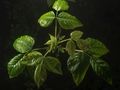
Eastern poison ivy, a noxious plant species, thrives in the wetlands of Wolf Pen Creek Park in College Station, Texas. On April 19, 2020, this particular specimen was captured on camera, showcasing its intricate leaf structure and vibrant green hue. Despite its beauty, it is important to exercise caution around this plant, as its sap can cause painful skin irritation and allergic reactions in some individuals. – generated by AI |
The image depicts a close-up view of eastern poison ivy (Toxicodendron radicans), showcasing its vibrant green leaves and intricate structure. The plant's leaves are predominantly three-lobed with pointed tips, arranged alternately along the stem. The leaves' veins are visible on both sides, particularly prominent on the underside. Each leaf is approximately 2 to 5 inches in length, depending on their position on the vine. A few leaves exhibit a slightly lighter shade of green, likely due to being more exposed to direct sunlight. The stem is reddish-brown and thin, with small water droplets scattered across its surface, indicating recent rainfall or moisture. The base of the plant appears to be climbing up a vertical surface using aerial roots or rhizomes that grow in multiple directions from the main stem. This adaptation enables the plant to thrive in various environments. The surrounding foliage is relatively dark green and appears to consist of smaller leaves, possibly belonging to another species or the same plant at an earlier stage of development. Overall, the image captures a detailed view of eastern poison ivy's unique characteristics and growth patterns, highlighting its ability to adapt to different environments. – AI vision |
El roble envenenado oriental (Toxicodendron radicans) en Wolf Pen Creek Park. College Station, Texas, 19 de abril de 2020. La imagen muestra una vista cercana del roble envenenado oriental (Toxicodendron radicans), que destaca sus hojas verdes vibrantes y su estructura intrincada. Las hojas de la planta tienen predominantemente tres lóbulos con puntas agudas, dispuestas alternativamente a lo largo del tallo. Las venas de las hojas son visibles en ambos lados, particularmente prominentes en la parte inferior. Cada hoja mide aproximadamente de 2 a 5 pulgadas de longitud, dependiendo de su posición en la planta. Unas pocas hojas exhiben un tono verde ligeramente más claro, probablemente debido a estar más expuestas a la luz solar directa. El tallo es rojizo-marrón y delgado, con pequeñas gotitas de agua dispersadas por toda su superficie, lo que indica lluvia reciente o humedad. La base de la planta parece estar subiendo una superficie vertical usando raíces aéreas o rizomas que crecen en múltiples direcciones desde el tallo principal. Esta adaptación permite que la planta se desarrolle en diversos entornos. El follaje circundante es relativamente oscuro y verde, y parece consistir en hojas más pequeñas, posiblemente pertenecientes a otra especie o la misma planta en una etapa anterior de desarrollo. En general, la imagen captura una vista detallada de las características únicas y los patrones de crecimiento del roble envenenado oriental, destacando su capacidad para adaptarse a diferentes entornos. – Spanish translation |
| [+] | poison ivy | |
| [+] | texas poison ivy | |
| [+] | wolf pen creek park |
Keyword variants
Pen Creek Park picture gallery
high resolution online digital collection
Berlin on the Brazos
Lone Star State
woody vine
United States
photo album
documentary photographs
daily pics
conservative town
climbing vine
Brazos County
Urushiol
TX
travelogue
snapshots
sightseeing
photowalks
photoblog
graphic
fotografias
foto
Bryan
Anacardiaceae
America
allergic
Aggieland