 |
| |||||||||||||||||

| ||||||||||||||||||


| Similar |   |
  |
  |
  |
  |
| |||||||||||||||||||||||||||||
| |||||||||||||||||||||||||||||
| 1996 1997 1998 1999 2000 2001 2002 2003 2004 2005 2006 2007 2008 2009 2010 2011 2012 2013 2014 2015 2016 2017 2018 2019 2020 2021 2022 2023 2024 2025 2026 | |||||||||||||||||||||||||||||
| New version Slide Show Most Popular Full List Statistics Technical Details Home Page | |||||||||||||||||||||||||||||
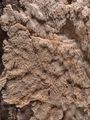
A white resupinate hydnoid mushroom was discovered at the base of a dry pine tree along Richards Loop Trail in Sam Houston National Forest, Texas, on July 28, 2020. Its unique growth habit and intricate details make it an interesting find for mushroom enthusiasts. – generated by AI |
The image presents a close-up view of a white, resupinate hydnoid mushroom growing at the base of a dry pine tree trunk. The mushroom's surface is characterized by numerous small, irregularly shaped teeth or spines that are spaced evenly apart and protrude from the main body of the fungus. **Key Features:** * **Color:** White The image provides a detailed look at the unique morphology of this particular species of hydnoid mushroom, which is likely to be found in environments where pines are present. The presence of the mushroom on the underside of the pine suggests that it may be a saprotrophic fungus, breaking down organic matter for nutrition. **Conclusion:** The image captures an interesting example of fungal diversity and highlights the importance of considering multiple perspectives when evaluating the characteristics of any species. By examining the shape, color, growth location, and surface texture of the mushroom, we can gain insights into its ecological role and potential uses in various fields such as medicine, agriculture, or environmental conservation. **Answer:** The image shows a white resupinate hydnoid mushroom growing at the base of a dry pine tree trunk. – AI vision |
Muestra un hongo blanco hidnóide resupinado creciendo en la base de un tronco seco de pino en el Sendero Richards Loop en la Sam Houston National Forest. Texas, el 28 de julio de 2020. La imagen presenta una vista cercana de un hongo blanco hidnóide resupinado que crece en la base de un tronco seco de pino. La superficie del hongo está caracterizada por numerosos dientes o espinas pequeñas e irregulares, separados regularmente y que sobresalen desde el cuerpo principal del hongo. **Principales rasgos:** * **Color:** Blanco * **Forma:** Resupinado (crece en la parte inferior de un sustrato) * **Lugar de crecimiento:** Base de un tronco seco de pino * **Textura superficial:** Dientes o espinas irregulares El análisis permite ver con detalle la morfología única de esta especie en particular de hongo hidnóide, que probablemente crezca en entornos donde haya pinos. La presencia del hongo en el lado inferior de un pino sugiere que se trata de un hongo saprotrofo, que descompone la materia orgánica para obtener nutrición. **Conclusión:** La imagen muestra una interesante variedad de hongos y subraya la importancia de considerar varias perspectivas al evaluar las características de cualquier especie. Examinando la forma, el color, el lugar donde crece y la textura superficial del hongo se pueden extraer datos sobre su función ecológica y sus posibles usos en diferentes ámbitos como la medicina, la agricultura o la conservación del medio ambiente. **Respuesta:** La imagen muestra un hongo blanco hidnóide resupinado creciendo en la base de un tronco seco de pino. – Spanish translation |
| [+] | base |
Keyword variants
Richards Loop Trail visual image
Houston National Forest visual image
high resolution online digital collection
Lone Star State
United States
picture gallery
photo album
documentary photographs
daily pics
TX
travelogue
snapshots
sightseeing
photowalks
photoblog
graphic
fungus
fungi
fotografias
foto
America