
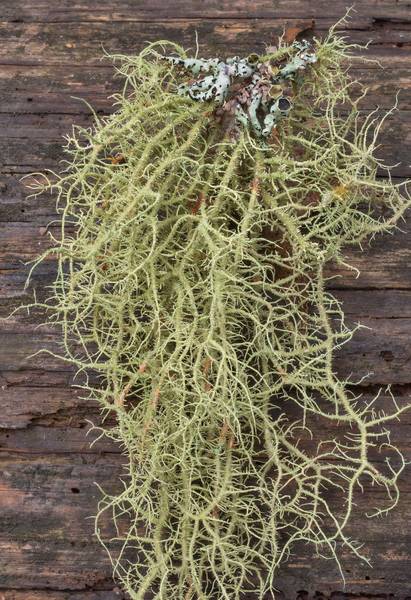

Beard lichen (Usnea) fallen from an oak on Caney Creek section of Lone Star Hiking Trail in Sam Houston National Forest north from Montgomery. Texas


Album 2798: Mushrooms in Sam Houston Forest, Texas, October 10 - 11, 2020
The image depicts a large clump of beard lichen (Usnea) that has fallen from an oak tree and is now lying on the ground. The lichen is long and thin, resembling a beard or a tuft of hair, hence its common name "beard lichen." It has a pale greenish-yellow color and appears to be quite delicate.
The background of the image shows the rough bark of the oak tree, which provides a natural habitat for the lichen. The overall scene suggests that the lichen has been dislodged from its usual perch on the tree and is now resting on the forest floor.
In terms of size, the clump of beard lichen appears to be quite substantial, covering an area of several square feet. It's likely that this particular specimen is one of the larger ones found in the forest, given its impressive size and robust appearance.
As for its condition, the lichen seems to be in good health, with no visible signs of damage or decay. Its color is vibrant and even, suggesting that it has been well-cared for by its environment.
Overall, this image provides a fascinating glimpse into the world of fungi and lichens, highlighting their unique characteristics and habitats. By studying images like these, we can gain a deeper appreciation for these often-overlooked organisms and the important roles they play in maintaining healthy ecosystems. – AI vision
🇪🇸 Descripción en español / Spanish Description
El líquen de la barba (Usnea) caído de un roble en la sección del sendero de excursiones Lone Star sobre el arroyo Caney en el bosque nacional Sam Houston al norte de Montgomery, Texas, el 10 de octubre de 2020. La imagen muestra una gran masa de líquen de la barba (Usnea) que ha caído de un roble y ahora está tumbada en el suelo. El líquen es largo y delgado, pareciéndose a una barba o un mechón de cabello, de ahí su nombre común "líquen de la barba". Tiene un color amarillento pálido y parece ser bastante delicado. El fondo de la imagen muestra la corteza áspera del roble, que proporciona un hábitat natural para el líquen. La escena general sugiere que el líquen ha sido desalojado de su percha habitual en el árbol y ahora descansa en el suelo del bosque. En términos de tamaño, la masa de líquen de la barba parece ser bastante sustanciosa, cubriendo un área de varias yardas cuadradas. Es probable que este espécimen en particular sea uno de los más grandes encontrados en el bosque, dado su impresionante tamaño y apariencia robusta. En cuanto a su condición, el líquen parece estar sano, sin signos visibles de daño o descomposición. Su color es vibrante y uniforme, lo que sugiere que ha sido bien cuidado por su entorno. En general, esta imagen proporciona una fascinante mirada al mundo de los hongos y líquenes, resaltando sus características únicas y hábitats. Al estudiar imágenes como estas, podemos obtener una apreciación más profunda por estos organismos a menudo olvidados y los importantes papeles que desempeñan en el mantenimiento de ecosistemas saludables. – Spanish translation


