 |
| |||||||||||||||||

| ||||||||||||||||||


| Similar |   |
  |
  |
  |
  |
| |||||||||||||||||||||||||||||
| |||||||||||||||||||||||||||||
| 1996 1997 1998 1999 2000 2001 2002 2003 2004 2005 2006 2007 2008 2009 2010 2011 2012 2013 2014 2015 2016 2017 2018 2019 2020 2021 2022 2023 2024 2025 2026 | |||||||||||||||||||||||||||||
| New version Slide Show Most Popular Full List Statistics Technical Details Home Page | |||||||||||||||||||||||||||||
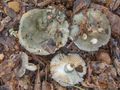
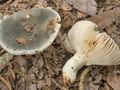
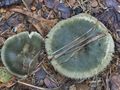
In the Big Creek Scenic Area of Sam Houston National Forest, Texas, a group of charcoal burner brittlegill mushrooms (Russula cyanoxantha) were found on October 11, 2020. These mushrooms are known for their vibrant blue-gray caps and bright yellow stems, which make them stand out against the forest floor. The area's diverse ecosystem provides an ideal environment for these fungi to thrive, with its mix of deciduous and coniferous trees and abundant understory vegetation. The photograph was taken on a crisp autumn day, capturing the mushrooms in their prime season. – generated by AI |
The image depicts three flat-topped "Charcoal Burner" mushrooms (Russula cyanoxantha), a type of poisonous mushroom that grows to about 4 inches tall and has a distinctive blue-gray cap with white gills underneath. The caps are slightly wavy at their edges, and the stems are short and stout. The image appears to have been taken in a forested area, possibly a Big Creek Scenic Area of Sam Houston National Forest, as mentioned in the caption. The surrounding environment is characterized by a mix of brown leaves, green plants, twigs, and dirt. Some dried-up sticks or branches can also be seen protruding from the ground. The overall setting suggests that the mushrooms have grown on the forest floor, possibly near the base of a tree or shrub. The presence of other plants and debris in the background adds context to the image, implying that it was taken in a natural environment where the mushrooms are likely to be found. Overall, the image provides a clear view of the Charcoal Burner mushrooms, allowing for identification and appreciation of their unique characteristics. – AI vision |
Los hongos brittlegill del carbón de leña (Russula cyanoxantha) en el área escénica Big Creek de la selva nacional Sam Houston. Shepherd, Texas, 11 de octubre de 2020. La imagen representa tres hongos "quemadores de carbón" de la parte superior plana (Russula cyanoxantha), un tipo de hongo venenoso que crece hasta una altura aproximada de 4 pulgadas y tiene un sombrero azul-grisáceo con márgenes blancos. Los márgenes son ligeramente ondulados, y los tallos son cortos y robustos. La imagen parece haberse tomado en una zona boscosa, posiblemente un área escénica de Big Creek de la selva nacional Sam Houston, como se menciona en el título. El entorno circundante está caracterizado por una mezcla de hojas marrones, plantas verdes, ramitas y tierra. Algunos palos secos o ramas también sobresalen del suelo. El escenario general sugiere que los hongos han crecido en el suelo forestal, posiblemente cerca de la base de un árbol o arbusto. La presencia de otras plantas y restos en el fondo añade contexto a la imagen, lo que indica que se tomó en un entorno natural donde es probable que se encuentren los hongos. En general, la imagen proporciona una vista clara de los hongos quemadores de carbón, lo que permite su identificación y apreciación de sus características únicas. – Spanish translation |
Keyword variants
high resolution online digital collection
Houston National Forest pics
Lone Star State
United States
Russula picture
picture gallery
photo album
mushroom picking
Mushroom hunting
edible mushroom
documentary photographs
daily pics
TX
travelogue
syroezhka
snapshots
sightseeing
Russulaceae
photowalks
photoblog
graphic
fungus
fungi
fotografias
foto
America