 |
| |||||||||||||||||

| ||||||||||||||||||


| Similar |   |
  |
  |
  |
  |
| |||||||||||||||||||||||||||||
| |||||||||||||||||||||||||||||
| 1996 1997 1998 1999 2000 2001 2002 2003 2004 2005 2006 2007 2008 2009 2010 2011 2012 2013 2014 2015 2016 2017 2018 2019 2020 2021 2022 2023 2024 2025 2026 | |||||||||||||||||||||||||||||
| New version Slide Show Most Popular Full List Statistics Technical Details Home Page | |||||||||||||||||||||||||||||
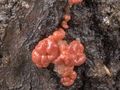
The pink jelly fungus (Craterocolla cerasi) can be seen thriving through the bark of a fallen aspen tree along an old railroad path west of Kuzmolovo, near Saint Petersburg, Russia. This photograph was captured on May 7, 2021, showcasing the unique and vibrant growth of this fungus species. – generated by AI |
The image depicts a close-up view of a pink jelly fungus growing through the bark of an aspen tree trunk along an old railroad path west from Kuzmolovo, near Saint Petersburg, Russia. The fungus is characterized by its vibrant pink color and unique growth pattern on top of the decaying tree trunk. The fungus appears to be growing in clusters or clumps across the surface, with some areas displaying a more rounded shape while others appear more irregular. In addition to the fungi, the image shows the rough texture of the decaying bark, which has developed cracks and crevices over time. This suggests that the tree may have been dead for several years, providing an ideal environment for the fungus to grow. The overall appearance of the image is one of decay and renewal, highlighting the intricate relationships between living organisms in nature. The presence of the fungi on a decaying aspen tree trunk is not surprising, given their role in decomposing organic matter and recycling nutrients back into the ecosystem. The pink coloration of the fungus may serve as a defense mechanism against herbivores or other competing microorganisms. Overall, this image provides valuable insights into the complex interactions between fungi, trees, and their environment, underscoring the importance of preserving and protecting these ecosystems for future generations. – AI vision |
Розовый гелеобразный гриб (Craterocolla cerasi) растет через кору упавшей ивы на старом железнодорожном пути к западу от Кузмолова, возле Санкт-Петербурга. Россия, 7 мая 2021 года. На изображении показан близкий вид розового гелеобразного гриба, растущего через кору ствола ивы вдоль старого железнодорожного пути к западу от Кузмолова, возле Санкт-Петербурга, России. Гриб характеризуется его ярко-розовым цветом и уникальным рисунком роста на верхушке гниющего ствола дерева. Гриб растет скоплениями или комками по всей поверхности, при этом некоторые области имеют более круглую форму, в то время как другие кажутся более нерегулярными. Кроме грибов, на изображении показывается грубая текстура гниющей коры, которая разработала трещины и зазоры с течением времени. Это предполагает, что дерево может быть мертво несколько лет, обеспечивая идеальную окружающую среду для роста гриба. Общий вид изображения — это разложение и обновление, подчеркивающие сложные взаимоотношения между живыми организмами в природе. Присутствие грибов на гнилом стволе ивы не удивительно, учитывая их роль в расщеплении органического вещества и переработки питательных веществ обратно в экосистему. Розовое окрашивание гриба может служить защитным механизмом от травоядных или других конкурирующих микроорганизмов. В целом, это изображение дает ценные сведения о сложном взаимодействии между грибами, деревьями и их окружающей средой, подчеркивая важность сохранения и защиты этих экосистем для будущих поколений. – Russian translation |
Keyword variants
high resolution online digital collection
St. Petersburg photo capture
St. Pete's
Soviet Union
Sankt Peterburg
Saint-Petersbourg
Russian Federation
Rossiya foto
picture gallery
photo album
Leningrad fotosnimki
former USSR
documentary photographs
daily pics
Venemaa
Venaja
travelogue
SPb
snimki
snapshots
sightseeing
Ryssland
Rwsia
Ruthenia
Rusya
Rusujo
Russland
Russja
Russie
Russi
Ruslando
Rusland
Rusko
Rusio
Rusija
Rusii
Rusia
Roushie
Rosya
Rosland
Rosia
Roshia
Raseja
Piter
Pietari
photowalks
photoblog
Petrograd
Orussiya
Oroszorszag
Lenjingrad
graphic
fotografias
fotki
Errusia