 |
| |||||||||||||||||

| ||||||||||||||||||


| Similar | 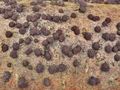  |
  |
  |
  |
  |
| |||||||||||||||||||||||||||||
| |||||||||||||||||||||||||||||
| 1996 1997 1998 1999 2000 2001 2002 2003 2004 2005 2006 2007 2008 2009 2010 2011 2012 2013 2014 2015 2016 2017 2018 2019 2020 2021 2022 2023 2024 2025 2026 | |||||||||||||||||||||||||||||
| New version Slide Show Most Popular Full List Statistics Technical Details Home Page | |||||||||||||||||||||||||||||
The Hazel woodwart fungus, Hypoxylon fuscum, can be found growing on the bark of dry alder trees in Tarkhovka Park, located west of Saint Petersburg, Russia. This image was captured on May 10, 2021, showcasing the unique and intricate patterns of the fungus. – generated by AI |
The provided photo depicts numerous circular brown spots on a light-colored tree trunk, likely an alder tree bark. The spots are scattered throughout and vary in size but are generally between approximately 0.5 cm (2.0 inches) to 1.8 cm (0.7 inches). They appear as small, irregularly-shaped depressions or holes, with no visible growths protruding from the surface. The overall appearance of the image suggests that it captures a moment in time where Hazel woodwart fungus is actively growing on and colonizing the alder tree bark. This is because the spots are relatively evenly distributed, indicating active spread and colonization rather than being randomly placed or isolated patches. Hypoxylon fuscum, the Hazel woodwart fungus, is typically found on deciduous trees, such as hazel (Corylus spp.) and alder (Alnus spp.), and tends to grow in clusters. This species of fungus can cause a range of effects on its host tree, from minor discoloration to more severe damage, depending on the stage of development and environmental conditions. Overall, the image provides valuable insights into the life cycle and ecology of Hazel woodwart fungus, offering a unique glimpse into the intricate relationships between fungi and their plant hosts. – AI vision |
Гриб серая деревоядка (Hypoxylon fuscum) на коре сухой осины в парке Тарховка к западу от Санкт-Петербурга. Россия, 10 мая 2021 года. На предоставленном фото изображены многочисленные круглые коричневые пятна на светлоокрашенной древесине ствола дерева, вероятно, осины. Пятна рассеяны и различаются по размеру, но обычно составляют от приблизительно 0,5 см (2,0 дюйма) до 1,8 см (0,7 дюймов). Они выглядят как небольшие, неправильно-сформированные углубления или отверстия, без видимых наростов, выступающих из поверхности. Общий вид изображения предполагает момент времени, где гриб серая деревоядка активно растет и колонизирует кору осины. Это происходит, потому что пятна относительно равномерно распределены, указывают на активное распространение и колонизацию, а не случайные или изолированные участки. Hypoxylon fuscum, гриб серая деревоядка, обычно встречается на лиственных деревьях, таких как осина (Corylus spp.) и ивы (Alnus spp.), И имеет тенденцию расти группами. Этот вид гриба может вызвать ряд эффектов на его хозяйском дереве, от незначительной потери цвета до более серьезного повреждения, в зависимости от стадии развития и условий окружающей среды. В общем, изображение дает ценную информацию о жизненном цикле и экологии гриба серая деревоядка, предлагая уникальный взгляд на сложные отношения между грибом и его растительным хозяином. – Russian translation |
Keyword variants
high resolution online digital collection
Tarkhovka Park picture
St. Pete's
St. Petersburg photos
Soviet Union
Sankt Peterburg
Saint-Petersbourg
Russian Federation
Rossiya foto
picture gallery
photo album
Leningrad fotosnimki
former USSR
documentary photographs
daily pics
Venemaa
Venaja
travelogue
SPb
snimki
snapshots
sightseeing
Ryssland
Rwsia
Ruthenia
Rusya
Rusujo
Russland
Russja
Russie
Russi
Ruslando
Rusland
Rusko
Rusio
Rusija
Rusii
Rusia
Roushie
Rosya
Rosland
Rosia
Roshia
Raseja
Piter
Pietari
photowalks
photoblog
Petrograd
Orussiya
Oroszorszag
Lenjingrad
graphic
fotografias
fotki
Errusia