 |
| |||||||||||||||||

| ||||||||||||||||||


| Similar | 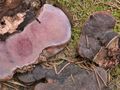  |
  |
  |
  |
  |
| |||||||||||||||||||||||||||||
| |||||||||||||||||||||||||||||
| 1996 1997 1998 1999 2000 2001 2002 2003 2004 2005 2006 2007 2008 2009 2010 2011 2012 2013 2014 2015 2016 2017 2018 2019 2020 2021 2022 2023 2024 2025 2026 | |||||||||||||||||||||||||||||
| New version Slide Show Most Popular Full List Statistics Technical Details Home Page | |||||||||||||||||||||||||||||
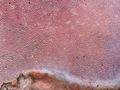
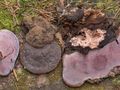
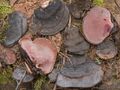
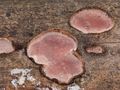
In the picturesque forests near the Okhta River in Toksovo, Russia, a fascinating sight can be observed during springtime - the bracket fungi Rhodofomes roseus (also known as Fomitopsis rosea) growing on the mossy trunk of a fallen spruce tree. On May 16th, 2021, this unique scene was captured, showcasing the intricate details of the delicate fungi and its symbiotic relationship with the moss-covered tree. – generated by AI |
The image presents a close-up view of two mushrooms situated on a moss-covered tree trunk. The left mushroom, characterized by its brown cap and reddish-brown stem, is partially obscured by the other mushroom. In contrast, the right mushroom features a pinkish-red cap with white spots. **Key Observations:** • **Mushroom Caps:** Both mushrooms display rounded caps. **Background:** The background of the image consists of a moss-covered tree trunk. The moss appears to be a light green color and covers the entire surface of the trunk. There are also some twigs or small branches scattered about the base of the trunk. **Overall Impression:** This image suggests that these mushrooms have been growing on this tree for some time, as they appear quite large in comparison to other fungi found in this location. It is likely that these mushrooms play an important role in breaking down organic matter and recycling nutrients back into the ecosystem. – AI vision |
Розовые шапочники Rhodofomes roseus на покрытом мхом стволе упавшей ели в лесу возле реки Охты в Токсово, к северу от Санкт-Петербурга. Россия, 16 мая 2021 года. На изображении видно крупным планом два гриба, расположенных на покрытом мхом стволе дерева. Левый гриб, который характеризуется коричневой шляпкой и красновато-коричневым стволом, частично затенен другим грибом. В отличие от него, у правого гриба розоватая шляпка с белыми пятнами. **Ключевые наблюдения:** • **Шляпы грибов:** Оба гриба имеют округлую форму. • **Стволы:** Стволы невысокие и крупные. • **Окраска:** Ствол левого гриба красновато-коричневый, а шляпка - коричневая. В отличие от него, у правого гриба розоватая шляпка с белыми пятнами. **Справочно:** На заднем фоне изображения виден покрытый мхом ствол дерева. Мх кажется зеленоватого цвета и покрывает всю поверхность ствола. Также на его основе разбросаны некоторые веточки или маленькие ветви. **Общее впечатление:** На этом изображении предполагается, что эти грибы росли на этом дереве в течение определенного времени, так как они кажутся довольно большими по сравнению с другими грибами, обнаруженными в этом месте. Вероятно, эти грибы играют важную роль в расщеплении органического вещества и переработке питательных веществ обратно в экосистему. – Russian translation |
Keyword variants
high resolution online digital collection
St. Pete's
St. Petersburg photograph
Okhta River pictures
Vsevolozhsky Rayon
Soviet Union
Sankt Peterburg
Saint-Petersbourg
Russian Federation
Rossiya foto
picture gallery
photo album
Leningradskaya Oblast
Leningrad fotosnimki
former USSR
documentary photographs
daily pics
Venemaa
Venaja
travelogue
SPb
snimki
snapshots
sightseeing
Ryssland
Rwsia
Ruthenia
Rusya
Rusujo
Russland
Russja
Russie
Russi
Ruslando
Rusland
Rusko
Rusio
Rusija
Rusii
Rusia
Roushie
Rosya
Rosland
Rosia
Roshia
Raseja
Piter
Pietari
photowalks
photoblog
Petrograd
Orussiya
Oroszorszag
Lenjingrad
graphic
fungus
fungi
fotografias
fotki
Errusia
dacha