 |
| |||||||||||||||||

| ||||||||||||||||||


| Similar | 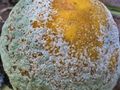  |
  |
  |
  |
  |
| |||||||||||||||||||||||||||||
| |||||||||||||||||||||||||||||
| 1996 1997 1998 1999 2000 2001 2002 2003 2004 2005 2006 2007 2008 2009 2010 2011 2012 2013 2014 2015 2016 2017 2018 2019 2020 2021 2022 2023 2024 2025 2026 | |||||||||||||||||||||||||||||
| New version Slide Show Most Popular Full List Statistics Technical Details Home Page | |||||||||||||||||||||||||||||
A discarded orange peel lay forgotten on the Winters Bayou Trail in Sam Houston National Forest, its surface covered by a vibrant green mould fungus known as Penicillium digitatum. This sight was captured on October 16th, 2021, in Cleveland, Texas. The mould's emerald hue contrasted starkly with the dull orange of the peel, creating a striking visual juxtaposition that seemed almost otherworldly. Despite its unassuming appearance, this discarded fruit rind was teeming with life, a testament to the incredible resilience and adaptability of nature. – generated by AI |
The image depicts a discarded orange peel, likely from an orange that has been consumed and then discarded. The peel is covered by a green mould fungus, which appears to be Penicillium digitatum. This type of fungus is commonly known as citrus green mould and is often found on oranges. In the background, there are some sticks or twigs visible, suggesting that the image was taken outdoors in a natural setting. The overall atmosphere of the image suggests that it was taken during the fall season, given the presence of fallen leaves and the fact that the orange peel has been discarded. The image provides a close-up view of the mould-covered orange peel, allowing for a detailed examination of its texture and appearance. The green colouration of the mould is particularly noticeable, giving the image a vibrant and eye-catching quality. Overall, the image effectively captures the decaying process of an orange peel, highlighting the role of microorganisms like Penicillium digitatum in breaking down organic matter. – AI vision |
Cáscara de naranja desechada cubierta por hongo moho verde Penicillium digitatum en Winters Bayou Trail en el Bosque Nacional Sam Houston. Cleveland, Texas, 16 de octubre de 2021. La imagen muestra una cáscara de naranja desechada, probablemente de una naranja que se ha consumido y luego se descartó. La cáscara está cubierta por un hongo moho verde, que parece ser Penicillium digitatum. Este tipo de hongo se conoce comúnmente como moho verde de cítricos y se encuentra a menudo en las naranjas. En el fondo, hay algunos palitos o ramitas visibles, lo que sugiere que la imagen se tomó al aire libre en un entorno natural. La atmósfera general de la imagen sugiere que fue tomada durante la temporada de otoño, dada la presencia de hojas caídas y el hecho de que la cáscara de naranja ha sido desechada. La imagen proporciona una vista detallada de la cáscara de naranja cubierta por moho, lo que permite un examen detallado de su textura y apariencia. El color verde del moho es particularmente notable, dando a la imagen un aspecto vibrante e impactante. En general, la imagen captura efectivamente el proceso de descomposición de una cáscara de naranja, resaltando el papel que juegan los microorganismos como Penicillium digitatum en la descomposición de la materia orgánica. – Spanish translation |
Keyword variants
high resolution online digital collection
Winters Bayou Trail image
Houston National Forest photos
Lone Star State
Bayou Trail photowalks
United States
small stream
picture gallery
photo album
documentary photographs
daily pics
TX
travelogue
snapshots
sightseeing
photoblog
graphic
fotografias
foto
creek
America