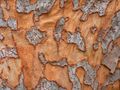
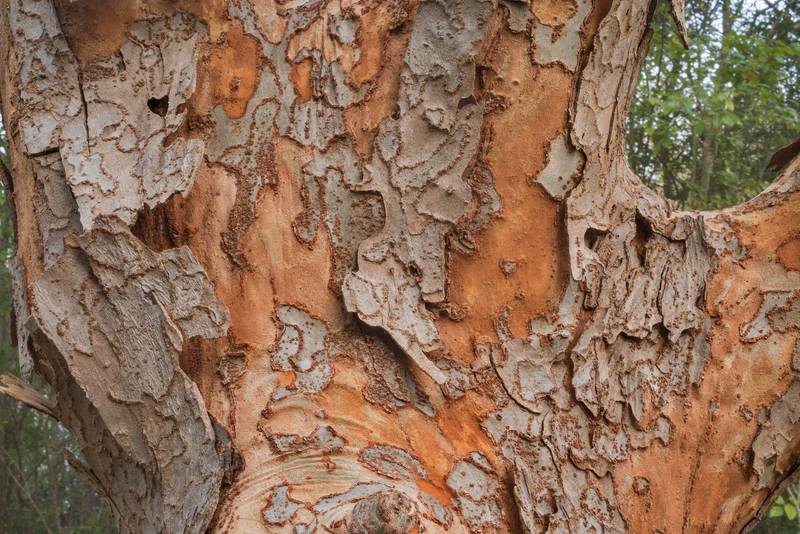

Bark of lacebark elm tree (Ulmus parvifolia) in Wolf Pen Creek Park. College Station, Texas


Album 3052: Lake Somerville - College Station, Texas, October 31 - November 2, 2021
The image presents a detailed view of a single tree trunk, specifically that of an Ulmus parvifolia, also known as the lacebark elm or Chinese elm. This deciduous species is native to China and parts of Japan, but has been widely introduced across other regions due to its attractive foliage and hardiness.
**Tree Trunk Characteristics**
* The tree's bark exhibits a distinctive mottled appearance, with patches of grayish-brown, tan, and reddish-brown hues.
* The bark is characterized by deep furrows and ridges, adding texture and depth to the overall image.
* A large branch emerges from the trunk near its base, creating an interesting visual dynamic.
**Background**
* In the background, a blurry forest of trees can be seen through openings in the tree's branches.
* Through these gaps, glimpses of green foliage are visible, suggesting that the surrounding area is densely wooded with a mix of deciduous and evergreen species.
**Overall Impression**
The image conveys a sense of ruggedness and resilience, as if the tree has weathered many storms over its years. The intricate patterns on its bark suggest a rich history of growth and adaptation, making it an appealing subject for nature enthusiasts and photographers alike. – AI vision
🇪🇸 Descripción en español / Spanish Description
Corteza del olmo lacebark (Ulmus parvifolia) en Wolf Pen Creek Park. College Station, Texas, 2 de noviembre de 2021. La imagen presenta una vista detallada de un solo tronco de árbol, específicamente el de un Ulmus parvifolia, también conocido como olmo lacebark o olmo chino. Esta especie caducifolia es nativa de China y partes de Japón, pero se ha introducido ampliamente en otras regiones debido a su atractivo follaje y resistencia.
**Características del tronco del árbol*
* La corteza muestra un aspecto moteado distintivo, con parches de tonos parduscos grisáceos, beige y rojizos. * La corteza se caracteriza por surcos y arrugas profundos que añaden textura y profundidad a la imagen en general. * Un gran ramal emerge del tronco cerca de su base, creando una dinámica visual interesante.
**Antecedentes*
* En el fondo, se ve un bosque borroso de árboles a través de aberturas en las ramas del árbol. * A través de estos huecos, se pueden ver destellos de follaje verde, lo que sugiere que la zona circundante está densamente arbolada con una mezcla de especies caducifoliadas y perennes.
**Impresión general**
La imagen transmite una sensación de robustez y resiliencia, como si el árbol hubiera soportado muchas tormentas a lo largo de los años. Los intrincados patrones en su corteza sugieren una rica historia de crecimiento y adaptación, convirtiéndolo en un tema atractivo para entusiastas de la naturaleza y fotógrafos. – Spanish translation