 |
| |||||||||||||||||

| ||||||||||||||||||


| Similar |   |
  |
  |
  |
  |
| |||||||||||||||||||||||||||||
| |||||||||||||||||||||||||||||
| 1996 1997 1998 1999 2000 2001 2002 2003 2004 2005 2006 2007 2008 2009 2010 2011 2012 2013 2014 2015 2016 2017 2018 2019 2020 2021 2022 2023 2024 2025 2026 | |||||||||||||||||||||||||||||
| New version Slide Show Most Popular Full List Statistics Technical Details Home Page | |||||||||||||||||||||||||||||
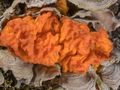
At Lake Somerville Trailway near Birch Creek Unit of Somerville Lake State Park in Texas, a fascinating sight can be observed on December 20, 2021 - the jelly fungus Tremella aurantia parasitizing the common wood rotter mushroom Stereum. This unique phenomenon showcases the intricate relationship between these two species, with the jelly fungus deriving nutrients from the mushroom while also gaining a platform for growth and reproduction. The vibrant orange color of the jelly fungus adds a pop of color to an otherwise drab landscape, making this sight a rare and captivating experience for nature enthusiasts. – generated by AI |
The image presents a close-up view of two distinct types of fungi growing on a tree trunk or log. The first fungus is identified as **Jelly Fungus (Tremella aurantia)** and appears to be parasitizing the second type, which is likely the **Common Wood Rotter Mushroom (Stereum hirsutum)**. The jelly fungus exhibits an orange hue with a translucent appearance, while the wood rotter mushroom displays a brownish-red coloration. The two species seem to be growing in close proximity on the same substrate, possibly a decaying log or tree trunk. The overall scene suggests that these fungi are colonizing and interacting within their environment. The image provides a detailed look at the unique characteristics of each fungus, including their textures, colors, and growth patterns. It highlights the complex relationships between different organisms in an ecosystem, where one species may be dependent on another for survival or nutrition. – AI vision |
El hongo de jalea Tremella aurantia parasitando al hongo podridor de madera común Stereum en el Lake Somerville Trailway cerca de Birch Creek Unit del Somerville Lake State Park. Texas, diciembre 20, 2021. La imagen muestra una vista detallada de dos tipos distintos de hongos que crecen en un tronco de árbol o un roble. El primer hongo se identifica como **Hongo de jalea (Tremella aurantia)** y parece estar parasitando el segundo tipo, que probablemente sea el **Hongo podridor de madera común (Stereum hirsutum)**. El hongo de jalea presenta un tono naranja con una apariencia translúcida, mientras que el hongo podridor de madera muestra una coloración pardusca. Las dos especies parecen crecer muy cerca una de la otra sobre el mismo sustrato, posiblemente una rama o tronco en descomposición. La escena global sugiere que estos hongos están colonizando e interactuando dentro de su entorno. La imagen proporciona un vistazo detallado de las características únicas de cada hongo, incluidas sus texturas, colores y patrones de crecimiento. Destaca las complejas relaciones entre diferentes organismos en un ecosistema, donde una especie puede ser dependiente de otra para la supervivencia o nutrición. – Spanish translation |
Keyword variants
high resolution online digital collection
Lake State Park photocapture
Lake Somerville Trailway photo
Somerville Lake SP
Somerville Lake pics
Lone Star State
birch tree photos
United States
picture gallery
photo album
documentary photographs
daily pics
TX
travelogue
snapshots
sightseeing
photowalks
photoblog
graphic
fungi
fotografias
foto
brzoza
breza
birken
birke
birk
birchen
birche
birce
betula
beriozka
berioza
bereza
beorc
America