
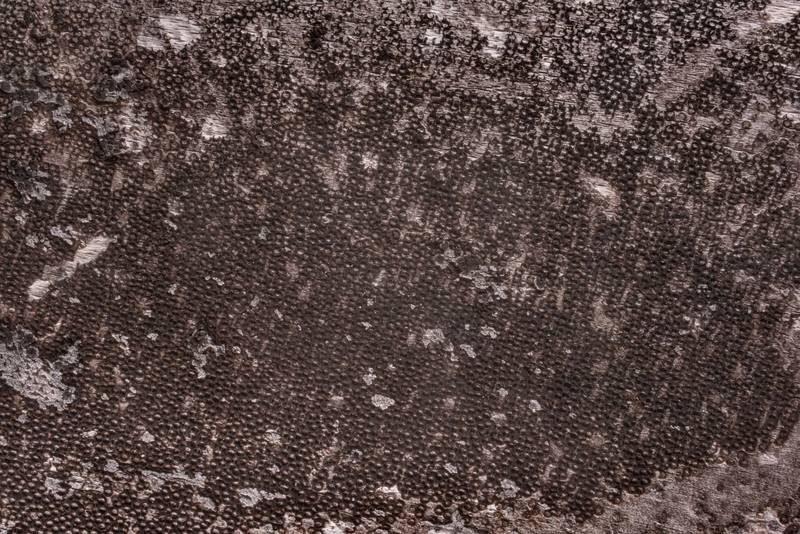

Some fungus or may be lichen on a trunk of Sabal palm in Leach Teaching Gardens at Texas A&M University. College Station, Texas


Album 3129: College Station, Texas, April 10 - 11, 2022
The image showcases a close-up view of a Sabal palm tree trunk, featuring a unique growth on its surface. The growth appears to be a combination of lichen and fungus, which are both types of non-vascular plants that thrive in environments with high humidity and low light levels.
**Key Features:**
* **Surface Texture:** The trunk's surface exhibits a rough, bumpy texture, likely due to the presence of the lichen and fungus.
* **Coloration:** The growth is predominantly dark brown or black, with lighter patches scattered throughout. These lighter areas may be indicative of different species of lichen or fungus.
* **Size and Shape:** The growth covers a significant portion of the trunk's surface, but its exact size and shape are difficult to determine from this angle.
**Context:**
The image was captured in Leach Teaching Gardens at Texas A&M University on April 10, 2022. This suggests that the Sabal palm tree is growing in an environment with controlled conditions, which may have contributed to the development of the lichen and fungus growths.
**Conclusion:**
In conclusion, the image presents a fascinating example of how non-vascular plants can colonize and thrive on tree trunks in specific environments. The combination of lichen and fungus creates a unique texture and coloration on the Sabal palm tree trunk, highlighting the importance of understanding these organisms in their natural habitats. – AI vision
🇪🇸 Descripción en español / Spanish Description
Algunos hongos o posiblemente líquenes en un tronco de palma sabal en los jardines de enseñanza Leach de la universidad Texas A&M. College Station, Texas, 10 de abril de 2022. La imagen muestra una vista detallada del tronco de un árbol de palmera Sabal, con un crecimiento único en su superficie. El crecimiento parece ser una combinación de líquenes y hongos, que son ambos tipos de plantas no vasculares que prosperan en entornos con alta humedad y bajos niveles de luz. **Características clave:** * **Textura superficial:** La superficie del tronco presenta una textura áspera y bultuda, probablemente debido a la presencia del líquen y los hongos. * **Coloración:** El crecimiento es predominantemente de color marrón oscuro o negro, con manchas más claras dispersas por toda ella. Estas áreas más claras pueden ser indicativas de diferentes especies de líquenes o hongos. * **Tamaño y forma:** El crecimiento cubre una parte importante de la superficie del tronco, pero su tamaño exacto y su forma son difíciles de determinar desde esta perspectiva. **Contexto:** La imagen fue capturada en los jardines de enseñanza Leach de la universidad Texas A&M el 10 de abril de 2022. Esto sugiere que la palmera sabal está creciendo en un entorno con condiciones controladas, lo cual podría haber contribuido al desarrollo del crecimiento de líquenes y hongos. **Conclusión:** En conclusión, la imagen presenta un fascinante ejemplo de cómo las plantas no vasculares pueden colonizar y prosperar en troncos de árboles en entornos específicos. La combinación de líquenes y hongos crea una textura y coloración únicas en el tronco de la palmera Sabal, lo que subraya la importancia de comprender estos organismos en sus hábitats naturales. – Spanish translation


