 |
| |||||||||||||||||

| ||||||||||||||||||


| Similar | 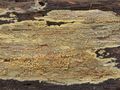  |
  |
  |
  |
  |
| |||||||||||||||||||||||||||||
| |||||||||||||||||||||||||||||
| 1996 1997 1998 1999 2000 2001 2002 2003 2004 2005 2006 2007 2008 2009 2010 2011 2012 2013 2014 2015 2016 2017 2018 2019 2020 2021 2022 2023 2024 2025 2026 | |||||||||||||||||||||||||||||
| New version Slide Show Most Popular Full List Statistics Technical Details Home Page | |||||||||||||||||||||||||||||
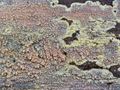
A close-up view of an orange warty corticioid fungus adorns the surface of a log along Winters Bayou Trail in Sam Houston National Forest, Cleveland, Texas. The photograph was captured on August 27, 2022, showcasing the intricate details and vibrant hues of this fascinating fungal species. – generated by AI |
The image presents a close-up view of an orange warty corticioid fungus growing on a log along the Winters Bayou Trail in Sam Houston National Forest. The surface of the log is densely covered with small, rounded, and slightly raised bumps or warts that are light to medium orange-brown in color. These growths are irregularly spaced across the surface and appear to be randomly distributed without any discernible pattern. They vary in size, but most are smaller than 1 mm in diameter. The rest of the log beneath these growths is mostly smooth with a few grooves running parallel to each other that provide some texture to the wood. The overall appearance suggests a corticioid fungus, which belongs to the order Corticiales and typically grows on decaying wood or plant material. This type of fungus often exhibits a crust-like or bracket-like structure, and its fruiting bodies can be variously colored depending on the species involved. In this case, the presence of small rounded warts that are orange in color suggests a possible identification as either **Xylaria hypoxylon** (Candle Snuff Fungus) or another corticioid species. However, without further information about the size, shape, and arrangement of these growths, it is challenging to provide a definitive identification. It's worth noting that corticioid fungi are generally saprotrophic, meaning they obtain their nutrients by breaking down dead organic matter. Therefore, their presence on logs in forests like Sam Houston National Forest indicates an active process of decomposition occurring within the ecosystem. In summary, the image shows a close-up view of orange warty growths on a log, which are likely to be part of a corticioid fungus. While some species can be identified based on morphology alone, more detailed examination or further study may be necessary for precise identification. – AI vision |
Un primer plano del hongo corticial anaranjado con verrugas en un tronco en el Winters Bayou Trail en la Sam Houston National Forest. Cleveland, Texas, 27 de agosto de 2022. La imagen presenta una vista detallada de un hongo corticial anaranjado con verrugas que crece en un tronco a lo largo del Winters Bayou Trail en la Sam Houston National Forest. La superficie del tronco está cubierta densamente con pequeñas protuberancias o verrugas redondas y ligeramente elevadas de color naranja-marrón claro a medio, separadas irregularmente entre sí por toda la superficie y distribuidas aleatoriamente sin ningún patrón discernible. Tienen un tamaño variable, pero en su mayoría son menores de 1 mm de diámetro. El resto del tronco bajo estos crecimientos es principalmente liso con algunos surcos que se extienden paralelamente entre sí que proporcionan algo de textura a la madera. La apariencia general sugiere un hongo corticial, que pertenece al orden Corticiales y crece típicamente en madera o material vegetal en descomposición. Este tipo de hongo suele presentar una estructura similar a costra o a repisa y sus frutos pueden ser de diferentes colores dependiendo de la especie involucrada. En este caso, la presencia de pequeñas verrugas redondas de color naranja sugiere una posible identificación como Xylaria hypoxylon (Candle Snuff Fungus) u otro hongo corticial. Sin embargo, sin más información sobre el tamaño, forma y disposición de estos crecimientos, es difícil proporcionar una identificación definitiva. Cabe señalar que los hongos corticiales son generalmente saprotrofos, lo que significa que obtienen sus nutrientes al descomponer la materia orgánica muerta. Por lo tanto, su presencia en troncos de árboles en bosques como el Sam Houston National Forest indica un proceso activo de descomposición dentro del ecosistema. En resumen, la imagen muestra un primer plano de crecimientos anaranjados con verrugas en un tronco, que es probablemente parte de un hongo corticial. Aunque algunas especies pueden identificarse únicamente por morfología, puede ser necesario un examen más detallado o un estudio adicional para una identificación precisa. – Spanish translation |
Keyword variants
high resolution online digital collection
Winters Bayou Trail photo
Houston National Forest photograph
Lone Star State
Bayou Trail picture
United States
small stream
picture gallery
photo album
documentary photographs
daily pics
TX
travelogue
snapshots
sightseeing
photowalks
photoblog
graphic
fotografias
foto
creek
America