 |
| |||||||||||||||||

| ||||||||||||||||||


| Similar |   |
  |
  |
  |
  |
| |||||||||||||||||||||||||||||
| |||||||||||||||||||||||||||||
| 1996 1997 1998 1999 2000 2001 2002 2003 2004 2005 2006 2007 2008 2009 2010 2011 2012 2013 2014 2015 2016 2017 2018 2019 2020 2021 2022 2023 2024 2025 2026 | |||||||||||||||||||||||||||||
| New version Slide Show Most Popular Full List Statistics Technical Details Home Page | |||||||||||||||||||||||||||||
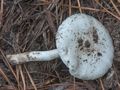
The underside of a white Amanita mushroom, photographed on September 7, 2022, along Richards Loop Trail in the Sam Houston National Forest of Texas, showcases intricate details and textures that are often overlooked. The delicate veins and ridges of the mushroom's cap create a unique pattern, adding depth and character to its already striking appearance. – generated by AI |
The image shows the underside of a white Amanita mushroom growing on the ground in a forested area. The mushroom's cap is not visible in the image and only its gills are seen. The gills are long and thin and grow out from an oblong, white stem that appears to be covered in dirt and debris. The background of the image features a layer of dry grasses and twigs on top of dark brown soil. The mushroom is likely growing in a forested area due to its habitat preferences for certain types of trees or decaying organic matter. It may also be found near animal droppings, which can provide nutrients that support its growth. The mushroom's white color suggests it might be poisonous to humans and animals, so caution should be exercised when handling or approaching the mushroom. Overall, the image provides a close-up view of the underside of a rare and potentially poisonous mushroom growing in its natural habitat. – AI vision |
El lado inferior de un hongo Amanita blanco en el Richards Loop Trail en la Sam Houston National Forest. Texas, septiembre 7, 2022. La imagen muestra el lado inferior de un hongo Amanita blanco creciendo en el suelo en una área boscosa. La tapa del hongo no es visible en la imagen y solo se ven sus láminas. Las láminas son largas y delgadas y crecen desde un tallo oblongo y blanco que parece estar cubierto de polvo y desechos. El fondo de la imagen presenta una capa de hierbas secas y ramitas sobre el suelo marrón oscuro. Es probable que el hongo esté creciendo en un área boscosa debido a sus preferencias de hábitat para ciertos tipos de árboles u materia orgánica en descomposición. También puede encontrarse cerca de excrementos animales, lo que puede proporcionar nutrientes que soporten su crecimiento. El color blanco del hongo sugiere que podría ser venenoso para humanos y animales, por lo que se debe tener precaución al manejar o acercarse al hongo. En general, la imagen proporciona una vista cercana del lado inferior de un hongo raro y potencialmente venenoso creciendo en su hábitat natural. – Spanish translation |
Keyword variants
Richards Loop Trail visual image
high resolution online digital collection
Houston National Forest photo
Lone Star State
United States
picture gallery
photo album
documentary photographs
daily pics
TX
travelogue
snapshots
sightseeing
photowalks
photoblog
graphic
fungus
fungi
fotografias
foto
America