 |
| |||||||||||||||

| ||||||||||||||||


| Similar |   |
  |
  |
  |
  |
| |||||||||||||||||||||||||||
| |||||||||||||||||||||||||||
| 1996 1997 1998 1999 2000 2001 2002 2003 2004 2005 2006 2007 2008 2009 2010 2011 2012 2013 2014 2015 2016 2017 2018 2019 2020 2021 2022 2023 2024 2025 2026 | |||||||||||||||||||||||||||
| New version Slide Show Most Popular Full List Statistics Technical Details Home Page | |||||||||||||||||||||||||||
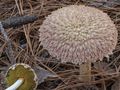
The longitudinally striated spores of the pineapple bolete mushroom (Boletellus ananas) collected on Caney Creek Trail (Little Lake Creek Loop Trail) in Sam Houston National Forest, located north of Montgomery, Texas, were photographed on September 14, 2022. – generated by AI |
The image shows spores of a mushroom species known as pineapple bolete mushrooms (Boletellus ananas). These spores are characterized by their elongated shape and the presence of longitudinal striations on their surface. The background of the image is white, which provides good contrast for observing the details of the spores. The pineapples bolete mushroom is a type of fungus that belongs to the Boletaceae family. It is commonly found in North America and is known for its distinctive fruiting bodies, which have a reddish-brown cap with wavy edges and a white or cream-colored stem. The mushroom grows on the ground, often near trees, and is typically found in clusters. The spores of the pineapple bolete mushroom are important for the reproduction of the fungus. They are produced in large numbers within the fruiting bodies and are dispersed by wind, water, or animals. When conditions are favorable, the spores germinate to form new mycelium, which eventually produces more fruiting bodies. Overall, the image provides a clear view of the spores of the pineapple bolete mushroom, highlighting their unique characteristics and importance in the life cycle of this fascinating fungus. – AI vision |
Las esporas longitudinalmente rayadas de hongos Boletellus ananas recogidas en el sendero Caney Creek (Little Lake Creek Loop Trail) en la Sam Houston National Forest al norte de Montgomery, Texas, el 14 de septiembre de 2022. La imagen muestra las esporas de una especie de hongo conocida como Boletellus ananas. Estas esporas se caracterizan por su forma alargada y la presencia de estriaciones longitudinales en su superficie. El fondo de la imagen es blanco, lo que proporciona un buen contraste para observar los detalles de las esporas. El hongo Boletellus ananas es un tipo de hongo que pertenece a la familia Boletaceae. Se encuentra comúnmente en Norteamérica y se conoce por sus cuerpos fructíferos distintivos, que tienen una tapa marrón rojiza con bordes ondulados y un tallo blanco o de color crema. El hongo crece en el suelo, a menudo cerca de árboles, y se encuentra normalmente en racimos. Las esporas del Boletellus ananas son importantes para la reproducción del hongo. Se producen en grandes cantidades dentro de los cuerpos fructíferos y se dispersan por viento, agua o animales. Cuando las condiciones son favorables, las esporas germinan para formar nuevo micelio, que eventualmente produce más cuerpos fructíferos. En general, la imagen proporciona una vista clara de las esporas del Boletellus ananas, destacando sus características únicas y su importancia en el ciclo vital de este fascinante hongo. – Spanish translation |
Keyword variants
microscopy
micrograph
Lake Creek Loop web graphics
high resolution online digital collection
Caney Creek Trail online image
Houston National Forest picture
Creek Loop Trail photo
Lone Star State
Little Lake photo
United States
picture gallery
photo album
documentary photographs
daily pics
TX
travelogue
snapshots
sightseeing
photowalks
photoblog
littel
graphic
fungus
fungi
fotografias
foto
America