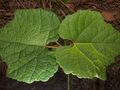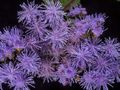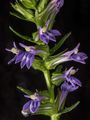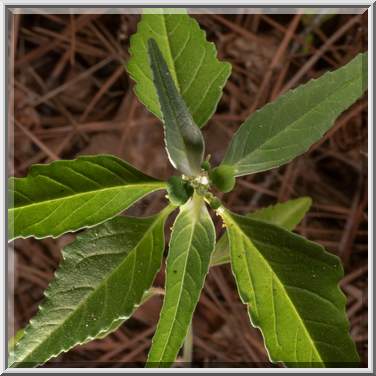
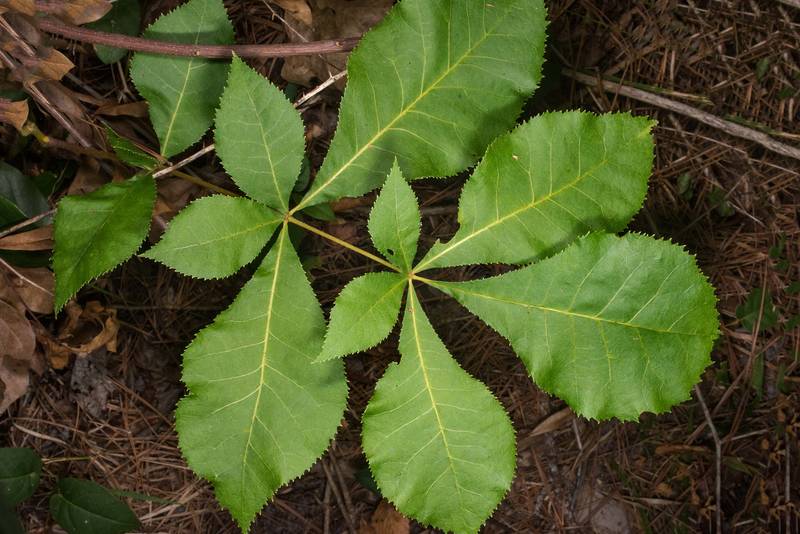
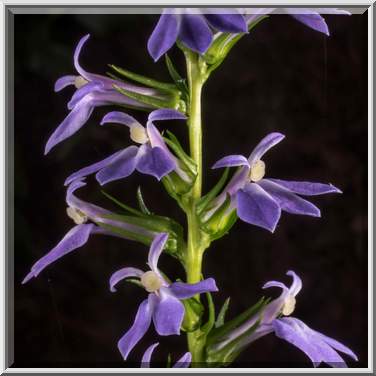
Some leaves on Lone Star Hiking Trail east from Trailhead 3 in Sam Houston National Forest near Montgomery. Texas

Album 3257: Sam Houston Forest, Texas, October 8 - 9, 2022
The image features a collection of green leaves situated on the forest floor, with their stems extending outward and downward into the ground. Each leaf has five pointed lobes, which are typically characteristic of poison ivy (Toxicodendron radicans). The topmost leaf is oriented towards the center of the image.
Notably, the leaves appear to be healthy and well-maintained, indicating that they have not been exposed to any significant environmental stressors. The surrounding area is dominated by a mix of dead plant material and pine needles on the forest floor, suggesting that the environment has experienced some seasonal changes or seasonal decay.
The presence of poison ivy in this location is consistent with its typical habitat preferences, which include areas along streams, rivers, and other water sources. Its ability to thrive in these environments likely contributes to the widespread distribution of the plant across North America.
Overall, the image provides a unique glimpse into the natural world, highlighting the intricate relationships between plants and their surroundings. By examining the details of this image, we can gain a deeper understanding of the complex ecosystems that exist within our environment. – AI vision
🇪🇸 Descripción en español / Spanish Description
Algunas hojas en el Lone Star Hiking Trail al este del Trailhead 3 en el Bosque Nacional Sam Houston cerca de Montgomery, Texas, octubre 9, 2022. La imagen presenta una colección de hojas verdes situadas en el suelo del bosque, con sus tallos extendiéndose hacia afuera y hacia abajo en el suelo. Cada hoja tiene cinco lóbulos puntiagudos, lo que es típicamente característico del saucelito (Toxicodendron radicans). La hoja más superior está orientada hacia el centro de la imagen. Cabe destacar que las hojas parecen sanas y bien mantenidas, lo que indica que no se han expuesto a factores de estrés ambientales significativos. El área circundante está dominada por una mezcla de material vegetal muerto y pinos en el suelo, sugiriendo que el entorno ha experimentado algunos cambios o descomposición estacionales. La presencia de saucelito en este lugar es consistente con sus preferencias de hábitat típicas, que incluyen áreas a lo largo de arroyos, ríos y otras fuentes de agua. Su capacidad para prosperar en estos entornos probablemente contribuye a la amplia distribución de la planta por toda América del Norte. En general, la imagen proporciona una visión única del mundo natural, destacando las intrincadas relaciones entre las plantas y su entorno. Al examinar los detalles de esta imagen, podemos obtener un mayor conocimiento de los complejos ecosistemas que existen en nuestro entorno. – Spanish translation