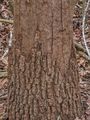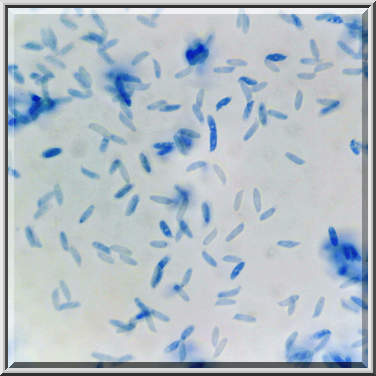
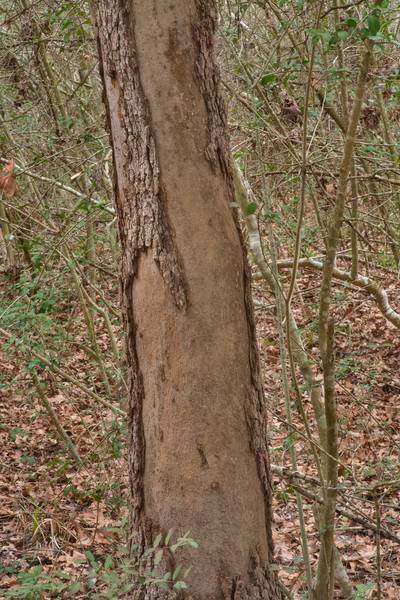
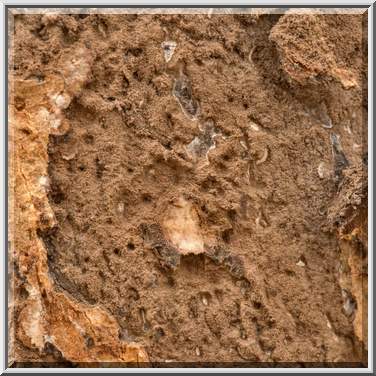
Oak trunk damaged by brown Hypoxylon canker fungus (Biscogniauxia) on a trailway near Birch Creek Unit of Somerville Lake State Park. Texas


Album 3343: College Station, Texas, February 15, 2023
The image shows an oak tree trunk that has been severely damaged by brown Hypoxylon canker fungus (Biscogniauxia). The tree is standing on a trailway surrounded by leaves and twigs of smaller plants.
**Tree Trunk:**
* The trunk of the oak tree appears to be grayish-brown in color.
* It has deep cracks running vertically along its length, indicating significant damage from the fungus.
* The bark around these cracks is rough and peeling off, exposing the inner layers of the trunk.
**Background:**
* The surrounding area is covered with fallen leaves and twigs of smaller plants.
* In the background, other trees and vegetation can be seen through the gaps in the underbrush.
**Fungus:**
* Brown Hypoxylon canker fungus (Biscogniauxia) is a type of fungal disease that affects oak trees.
* It causes the tree to become infected with fungal spores, leading to damage to the trunk and branches.
* The fungus grows inside the tree, breaking down the wood tissue and causing it to decay.
**Overall:**
* The image suggests that the oak tree has been severely damaged by the brown Hypoxylon canker fungus.
* The extent of the damage indicates that the tree may be nearing collapse or has already succumbed to the disease.
* The presence of other trees and vegetation in the background suggests that this is a common problem affecting many oak trees in the area. – AI vision
🇪🇸 Descripción en español / Spanish Description
El tronco de un roble dañado por el hongo del muerto marrón (Biscogniauxia) en una vía cerca de la Unidad Birch Creek del Parque Estatal Somerville Lake. Texas, 15 de febrero de 2023. La imagen muestra un tronco de roble que ha sido gravemente dañado por el hongo del muerto marrón (Biscogniauxia). El árbol está parado en una vía rodeada de hojas y ramitas de plantas más pequeñas. * El tronco del roble aparece de color parduzco grisáceo. * Tiene grietas profundas que discurren verticalmente a lo largo de su longitud, indicando un daño significativo por el hongo. * La corteza alrededor de estas grietas es rugosa y se desprende, exponiendo las capas internas del tronco. **Fondo:** * La zona circundante está cubierta con hojas caídas y ramitas de plantas más pequeñas. * En el fondo, pueden verse otros árboles y vegetación a través de los huecos en la maleza. **Hongo:** * El hongo del muerto marrón (Biscogniauxia) es un tipo de enfermedad fúngica que afecta a los robles. * Causa que el árbol se infecte con esporas fúngicas, lo que da lugar a daños en el tronco y las ramas. * El hongo crece dentro del árbol, descomponiendo el tejido de la madera y provocando su decaimiento. **En general:** * La imagen sugiere que el roble ha sido gravemente dañado por el hongo del muerto marrón. * El alcance del daño indica que el árbol puede estar cerca de colapsar o ya ha sucumbido a la enfermedad. * La presencia de otros árboles y vegetación en el fondo sugiere que este es un problema común que afecta a muchos robles de la zona. – Spanish translation