
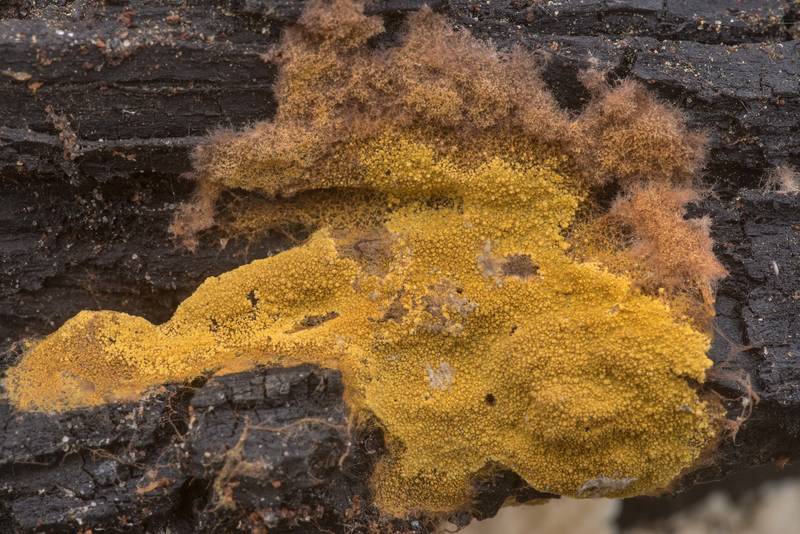

Some golden corticioid fungus on a burned pine log on Richards Loop Trail in Sam Houston National Forest. Texas


Album 3344: Fungi in Sam Houston Forest, Texas, February 18, 2023
The image shows a close-up view of a burnt pine log covered with various types of fungi and lichen.
* The log is made of dark brown wood that has been charred by fire. It appears to be a large piece of bark or branch from a tree.
* The surface of the log is covered with thick, yellowish-brown fungal growths. These appear to be corticioid fungi, which are types of fungi that grow on dead trees and other plant material. Corticioid fungi often have a bright yellow color when they first emerge, but may turn brown or gray as they age.
* There are also some patches of lichen growing on the log. Lichens are composite organisms made up of fungi and algae or cyanobacteria that live together in a symbiotic relationship. They can be found growing on rocks, trees, and other surfaces throughout the world.
Overall, this image shows a burned pine log covered with various types of fungi and lichen. The presence of these organisms suggests that the log has been dead for some time, allowing them to colonize it. – AI vision
🇪🇸 Descripción en español / Spanish Description
Algunos hongos corticios dorados en un tronco de pino quemado en el Richards Loop Trail en la Sam Houston National Forest. Texas, 18 de febrero del 2023. La imagen muestra una vista detallada de un tronco de pino quemado cubierto con diferentes tipos de hongos y musgo. * El tronco está hecho de madera marrón oscura que se ha quemado por el fuego. Parece ser un gran trozo de corteza o rama de un árbol. * La superficie del tronco está cubierta con espesos crecimientos fúngicos parduscos amarillentos. Estos parecen ser hongos corticios, que son tipos de hongos que crecen en los árboles muertos y otros materiales vegetales. Los hongos corticios a menudo tienen un color amarillo brillante cuando emergen por primera vez, pero pueden volverse marrones o grises a medida que envejecen. * También hay algunas manchas de musgo creciendo sobre el tronco. Los líquenes son organismos compuestos formados por hongos y algas u cianobacterias que viven juntos en una relación simbiótica. Pueden encontrarse creciendo sobre rocas, árboles y otras superficies en todo el mundo. En general, esta imagen muestra un tronco de pino quemado cubierto con diferentes tipos de hongos y musgo. La presencia de estos organismos sugiere que el tronco ha estado muerto durante algún tiempo, lo que les permite colonizarlo. – Spanish translation


