
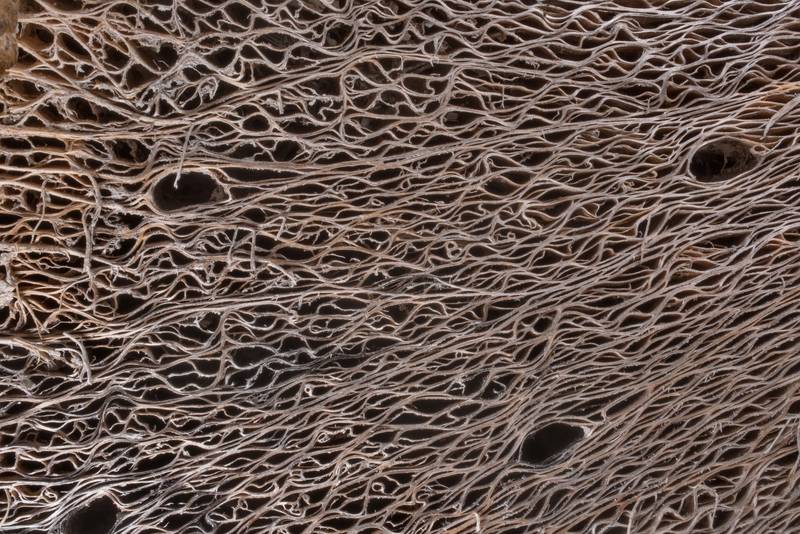

Texture of a pad skeleton of prickly pear cactus (Opuntia) in Washington-on-the-Brazos State Historic Site. Washington, Texas


Album 3480: Washington-on-the-Brazos, Texas, March 1, 2024
The photograph captures the intricate texture of a prickly pear cactus pad skeleton at Washington-on-the-Brazos State Historic Site in Texas. The dark brownish-gray coloration suggests that the pad is dry and possibly weathered or dead. The pad's surface features numerous small holes, likely created by insects, rodents, or natural decay.
The most striking aspect of this image is its intricate web-like structure, reminiscent of a spider's web. This complex network of fibers appears to be made up of thin, curved strands that are tightly woven together. Each strand may have originated from a single point on the pad and then grown outward in all directions.
This unique structure likely provides additional support to the plant by increasing its surface area and enabling it to absorb more water and nutrients from the surrounding environment. The intricate texture also makes the prickly pear cactus appear both fragile and robust at the same time, giving insight into its remarkable ability to thrive in harsh conditions.
Overall, this image offers a fascinating glimpse into the natural world and highlights the importance of preserving and protecting these unique ecosystems for future generations to appreciate. – AI vision
🇪🇸 Descripción en español / Spanish Description
El esqueleto de la almohadilla del cactus de pinocho (Opuntia) en el Sitio Histórico Estatal Washington-on-the-Brazos. Washington, Texas, 1 de marzo de 2024. La fotografía captura la textura compleja del esqueleto de una almohadilla de cactus de pinocho en el Sitio Histórico Estatal Washington-on-the-Brazos en Texas. La coloración marrón oscuro sugiere que la almohadilla está seca y posiblemente desgastada o muerta. La superficie de la almohadilla presenta numerosos pequeños agujeros, probablemente creados por insectos, roedores o descomposición natural. El aspecto más llamativo de esta imagen es su estructura intrincada en forma de red, que recuerda a una araña. Esta compleja red de fibras parece estar formada por finos hilos curvados que están fuertemente tejidos juntos. Cada hebra puede haberse originado desde un único punto en la almohadilla y luego crecido hacia afuera en todas las direcciones. Esta estructura única proporciona probablemente apoyo adicional a la planta al aumentar su área de superficie y permitirle absorber más agua y nutrientes del medio circundante. La textura intrincada también hace que el cactus de pinocho parezca frágil y robusto al mismo tiempo, dando una idea de su notable capacidad para sobrevivir en condiciones duras. En general, esta imagen ofrece un fascinante vistazo al mundo natural y destaca la importancia de preservar y proteger estos ecosistemas únicos para las generaciones futuras que los aprecien. – Spanish translation


