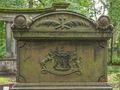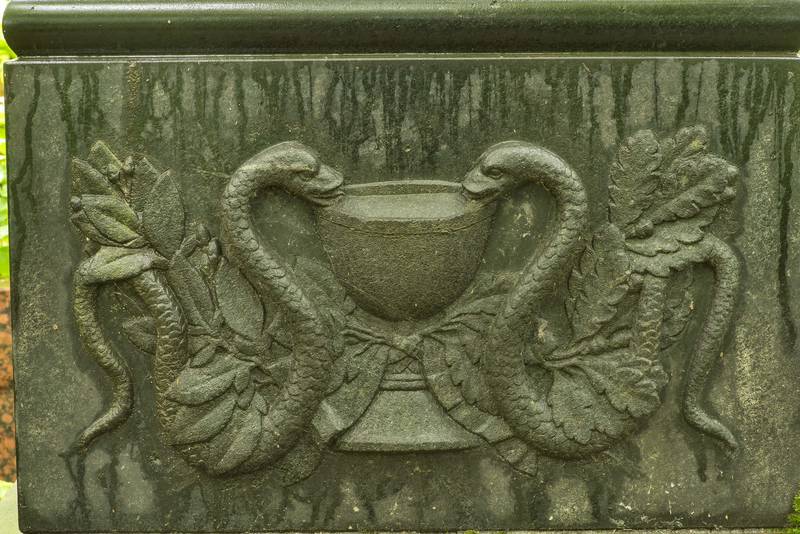

Two snakes with a cup on a tomb in Smolenskoe Lutheran Cemetery on Dekabristov Island. St.Petersburg, Russia


Album 3602: Smolenskoe Lutheran Cemetery in Saint Petersburg, Russia, August 12, 2024
The image is a close-up photograph of a stone tombstone or headstone featuring an intricate carving of two snakes coiled around a cup. The scene depicts the mythological symbol of Asclepius, also known as Rod of Asclepius.
**Scene Description**
* **Cup**: A simple bowl-shaped object with no lid sits in the center of the image.
* **Snakes**: Two serpents are entwined around the cup, facing opposite directions. Their bodies form a tight spiral, creating a sense of harmony and balance.
* **Ribbon or Cloth**: A ribbon is wrapped around the cup, adding a decorative touch to the scene.
**Background**
The background of the image is blurred, but it appears to be a cemetery or graveyard, with other tombstones visible in the distance. The overall atmosphere of the image is one of serenity and contemplation.
**Symbolism**
The Rod of Asclepius symbolizes healing and medicine, making this carving likely associated with someone who worked in these fields or had an interest in them. The use of a cup instead of a staff may also suggest a connection to apothecary work or pharmacy.
**Conclusion**
Overall, the image is a beautiful example of stone carvings from ancient times, showcasing skillful craftsmanship and attention to detail. – AI vision
🇷🇺 Описание по-русски / Russian Description
Две змеи с кубком на надгробии на Смоленском лютеранском кладбище на острове Декабристов. Санкт-Петербург, Россия, 12 августа 2024 года. Изображение представляет собой крупный план каменного надгробия с изображением сложной резьбы двух змей, закрученных вокруг кубка. Сцена изображает мифологический символ Асклепия, также известный как Жезл Асклепия.
* **Кубок**: На центре снимка находится простой посудой формы объект без крышки.
* **Змеи**: Две змеи сплетены вокруг кубка, обращённые в противоположных направлениях. Их тела образуют плотную спираль, создающую ощущение гармонии и равновесия.
* **Лента или ткань**: Лента обернута вокруг кубка, добавляя декоративной оттенок к сцене.
**Предыстория** Фон изображения размыт, но на нем виден кладбище или могильник, другие надгробия видны вдалеке. Общая атмосфера изображения - спокойствие и созерцание.
**Символизм** Жезл Асклепия символизирует целительство и медицину, делая эту резьбу, вероятно, связанной с кем-то, кто работал в этих областях или имел интерес к ним. Использование кубка вместо посоха также может предполагать связь с аптечной работой или фармацевтикой.
**Заключение** В целом, изображение представляет собой прекрасный пример каменных резцов древности, демонстрируя искусное мастерство и внимание к деталям. – Russian translation