 |
| |||||||||||||||

| ||||||||||||||||


| Similar | 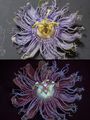  |
  |
  |
  |
  |
| |||||||||||||||||||||||||||
| |||||||||||||||||||||||||||
| 1996 1997 1998 1999 2000 2001 2002 2003 2004 2005 2006 2007 2008 2009 2010 2011 2012 2013 2014 2015 2016 2017 2018 2019 2020 2021 2022 2023 2024 2025 2026 | |||||||||||||||||||||||||||
| New version Slide Show Most Popular Full List Statistics Technical Details Home Page | |||||||||||||||||||||||||||
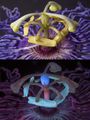
The image presents a striking comparison between two photographs of the same Passion flower, showcasing its appearance under regular daylight and when illuminated by a 365 nm ultraviolet (UV-A) blacklight. **Top Image: Regular Daylight** * The top photograph displays the passion flower in its natural state, with no artificial lighting. **Bottom Image: UV-A Blacklight Illumination** * In contrast, the bottom photograph shows the same passion flower illuminated by a 365 nm UV-A blacklight. **Comparison and Conclusion** By comparing these two images, it becomes clear that the passion flower exhibits a unique sensitivity to ultraviolet light. This phenomenon allows researchers to study plant biology in greater detail than would be possible under regular daylight alone. The use of UV-A blacklight illumination has opened up new avenues for scientific inquiry into plant development, ecology, and evolution. Overall, this image highlights the fascinating ways in which plants interact with their environment at a molecular level, revealing previously unseen aspects of their biology. – AI vision |
La flor de la pasión (Passiflora foetida) cuando se expone a luz diurna regular y también cuando se ilumina con una luz negra ultravioleta (UV-A) de 365 nm desde un camino cerca del Birch Creek Unit de Somerville Lake State Park, Texas, el 28 de agosto de 2024. La imagen presenta una comparación sorprendente entre dos fotografías de la misma flor de la pasión, mostrando su aspecto bajo luz diurna regular y cuando se ilumina con una luz negra ultravioleta (UV-A) de 365 nm. **Imagen superior: Luz diurna regular** * La fotografía superior muestra la flor de la pasión en su estado natural, sin iluminación artificial. * Los pétalos de la flor tienen un tono morado suave con acentos amarillentos en las bases. * Se puede ver un centro amarillo, que cuenta con cinco estambres y tres pistilos. * El aspecto general de la flor es delicado y sutil. **Imagen inferior: Iluminación con luz negra UV-A** * En contraste, la fotografía inferior muestra la misma flor de la pasión iluminada con una luz negra ultravioleta (UV-A) de 365 nm. * Bajo esta longitud de onda específica de luz, la coloración de la flor cambia drásticamente: + Sus pétalos morados se vuelven más vibrantes y neónicos. + Los acentos amarillentos en las bases de los pétalos intensifican su brillo. + Se puede ver un tinte azul-verdoso en la punta de los estambres y pistilos. * El efecto general es uno de mayor contraste y drama visual, que resalta los detalles complejos de la estructura de la flor. **Comparación y conclusión** Al comparar estas dos imágenes, queda claro que la flor de la pasión exhibe una sensibilidad única a la luz ultravioleta. Este fenómeno permite a los investigadores estudiar la biología vegetal con mayor detalle de lo que sería posible bajo luz diurna regular solamente. El uso de iluminación con luz negra UV-A ha abierto nuevos caminos para la investigación científica en el desarrollo, ecología y evolución de las plantas. En general, esta imagen destaca las fascinantes formas en que las plantas interactúan con su entorno a nivel molecular, revelando aspectos de su biología previamente ocultos. – Spanish translation |
Keyword variants
high resolution online digital collection
Love-in-a-mist
Lake State Park photograph
Tagua Passion Flower
Stinking Passion Flower
Somerville Lake SP
Somerville Lake photowalks
Lone Star State
birch tree snapshot
Wild Maracuja
United States
Sneki Markusa
Pop Vine
picture gallery
photo album
Granadilla colorada
documentary photographs
daily pics
TX
travelogue
snapshots
sightseeing
photoblog
passionflower
graphic
fotografias
foto
brzoza
breza
birken
birke
birk
birchen
birche
birce
betula
beriozka
berioza
bereza
beorc
America