 |
| |||||||||||||||

| ||||||||||||||||


| Similar | 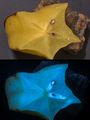  |
  |
  |
  |
  |
| |||||||||||||||||||||||||||
| |||||||||||||||||||||||||||
| 1996 1997 1998 1999 2000 2001 2002 2003 2004 2005 2006 2007 2008 2009 2010 2011 2012 2013 2014 2015 2016 2017 2018 2019 2020 2021 2022 2023 2024 2025 2026 | |||||||||||||||||||||||||||
| New version Slide Show Most Popular Full List Statistics Technical Details Home Page | |||||||||||||||||||||||||||
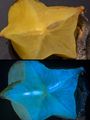
The image presents a comparative display of a star fruit slice under two lighting conditions: regular daylight and UV-A blacklight illumination. **Upper Image (Daylight)** * The star fruit slice is positioned centrally within the frame. **Lower Image (UV-A Blacklight)** * The star fruit slice occupies a similar central position as in the upper image. **Overall Observation** The star fruit's appearance changes dramatically when exposed to UV-A blacklight. While it retains its natural yellow coloration in daylight, it transforms into a striking blue hue under UV illumination. This phenomenon is likely due to the presence of fluorescent pigments within the fruit that absorb UV light and emit blue light upon excitation. The contrast between the two images highlights the unique properties of this fruit and its responsiveness to different types of lighting. – AI vision |
Un trozo de carambola (fruta estrella) cuando se expone a la luz normal del día y también cuando está iluminado con una luz negra ultravioleta (UV-A) de 365 nm en un supermercado. College Station, Texas, 3 de septiembre de 2024. La imagen presenta una exhibición comparativa de un trozo de fruta estrella bajo dos condiciones de iluminación: luz normal y luz negra UV-A. **Imagen superior (luz del día)** * El trozo de carambola está ubicado en el centro del marco. * Es iluminado por la luz natural desde arriba, sin lanzar sombras. * La coloración amarilla de la fruta es claramente visible, con algunas manchas o imperfecciones menores a lo largo de su superficie. **Imagen inferior (luz negra UV-A)** * El trozo de carambola ocupa una posición central similar a la imagen superior. * Sin embargo, esta vez está expuesto a luz negra UV-A desde abajo, resultando en un intenso brillo azul que permear toda la imagen. * La coloración amarilla de la fruta se ha transformado en un tono azul vibrante, con algunas áreas que aparecen más intensamente azules que otras. * La superficie del fruto no presenta manchas ni imperfecciones visibles bajo esta condición de iluminación. **Observación General** |
Keyword variants
high resolution online digital collection
Berlin on the Brazos
Lone Star State
United States
picture gallery
photo album
documentary photographs
daily pics
conservative town
Brazos County
TX
travelogue
snapshots
sightseeing
photowalks
photoblog
graphic
fotografias
foto
Bryan
America
Aggieland