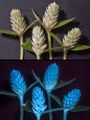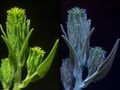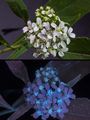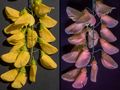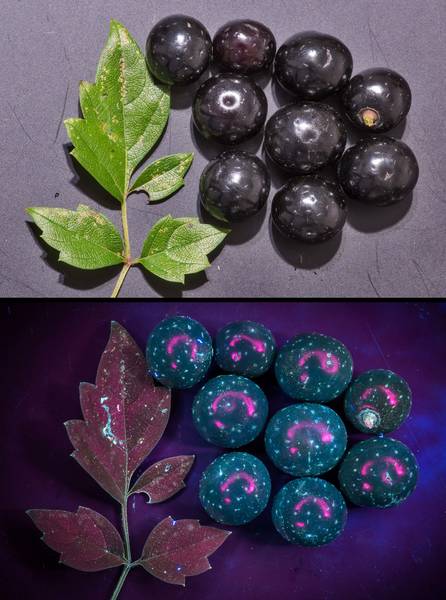

Peppervine (Ampelopsis arborea) when exposed to regular daylight as well as when illuminated by a 365 nm ultraviolet (UV-A) blacklight from Bee Creek Park. College Station, Texas


Album 3623: College Station - Sam Houston Forest, Texas, September 19 - 21, 2024
The image features two photographs of peppervine leaves and berries arranged side-by-side at equal height. The left photograph displays a dark gray background with green leaves from the top portion of the plant on the left, facing downwards, and black berries from the bottom portion of the plant on the right, facing upwards.
In contrast, the right photograph shows an identical arrangement against a deep purple or indigo background. However, upon closer inspection of both images in the light source column, it is evident that the right image features a UV-A blacklight illuminating the leaves and berries. The bottom portion of the plant's leaves exhibit a vibrant purplish-red coloration, while the top portion shows only subtle green undertones. Similarly, the upper portion of the blackberries appears to be black with a slight blue tint, while the lower part exhibits bright pink or magenta spots that resemble the appearance of fireflies.
The photographs demonstrate how different light sources can dramatically affect the perceived colors and appearance of plant material. The use of UV-A blacklight reveals hidden pigments in the leaves and berries, resulting in striking visual effects. This phenomenon highlights the importance of considering lighting conditions when interpreting or analyzing images of plants or other biological specimens. – AI vision
🇪🇸 Descripción en español / Spanish Description
Mostaza (Ampelopsis arborea) cuando se expone a la luz del día habitual y también cuando se ilumina con una luz negra de ultravioleta (UV-A) de 365 nm en Bee Creek Park. College Station, Texas, septiembre 20, 2024. La imagen muestra dos fotografías de hojas y bayas de mostaza dispuestas una al lado de la otra a la misma altura. La foto izquierda presenta un fondo gris oscuro con hojas verdes desde la parte superior de la planta en el lado izquierdo, hacia abajo, y bayas negras desde la parte inferior de la planta en el lado derecho, hacia arriba. En contraste, la foto derecha muestra una disposición idéntica contra un fondo morado oscuro o índigo. Sin embargo, al inspeccionar detenidamente ambas imágenes en la columna de fuentes de luz, es evidente que la imagen derecha presenta una luz negra de UV-A iluminando las hojas y bayas. La parte inferior de las hojas de la planta muestra una coloración rojiza púrpura brillante, mientras que la parte superior solo muestra matices verdes sutiles. De manera similar, la parte superior de los arándanos negros parece ser negro con un ligero tinte azulado, mientras que la parte inferior muestra puntos rosa o magenta brillantes que recuerdan la aparición de luciérnagas. Las fotografías demuestran cómo diferentes fuentes de luz pueden afectar drásticamente los colores y la apariencia percibidos del material vegetal. El uso de luz negra UV-A revela pigmentos ocultos en las hojas y bayas, lo que resulta en efectos visuales sorprendentes. Este fenómeno resalta la importancia de considerar las condiciones de iluminación al interpretar o analizar imágenes de plantas u otros especímenes biológicos. – Spanish translation