 |
| |||||||||||||||

| ||||||||||||||||


| Similar | 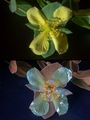  |
  |
  |
  |
  |
| |||||||||||||||||||||||||||
| |||||||||||||||||||||||||||
| 1996 1997 1998 1999 2000 2001 2002 2003 2004 2005 2006 2007 2008 2009 2010 2011 2012 2013 2014 2015 2016 2017 2018 2019 2020 2021 2022 2023 2024 2025 2026 | |||||||||||||||||||||||||||
| New version Slide Show Most Popular Full List Statistics Technical Details Home Page | |||||||||||||||||||||||||||
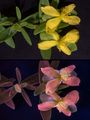
The image presents a striking comparison between the appearance of flowers under normal lighting conditions and their fluorescence when exposed to ultraviolet (UV-A) light at 365 nanometers. **Upper Image: Natural Light** * The upper image displays two yellow flowers with five petals each, showcasing their natural coloration. **Lower Image: UV-A Blacklight** * In contrast, the lower image reveals the same flowers under 365 nm ultraviolet (UV-A) blacklight illumination. **Overall Observation** The image highlights the unique property of certain plant species to exhibit fluorescence under UV-A light illumination. This phenomenon is likely due to the presence of specific compounds within the flowers that absorb light in the UV range and re-emit it at longer wavelengths, resulting in their characteristic colors. The observation of this effect may have practical applications in fields such as botany or horticulture, where understanding plant physiology could lead to new insights into plant growth and development. **Conclusion** In conclusion, the image provides a fascinating comparison between the appearance of flowers under natural light and their fluorescence when exposed to UV-A blacklight illumination. The observation of this effect offers valuable insights into the properties of these plants and may have significant implications for various fields of study. – AI vision |
Las flores de la cruz de San Andrés (Hypericum, Ascyrum hypericoides) tanto en luz natural como bajo luz negra ultravioleta (UV-A) de 365 nm desde el Richards Loop Trail en el Bosque Nacional Sam Houston. Texas, septiembre 21, 2024. La imagen presenta una sorprendente comparación entre la apariencia de las flores bajo condiciones normales de iluminación y su fluorescencia cuando se exponen a luz ultravioleta (UV-A) a 365 nanómetros. **Imagen superior: Luz natural** *La imagen superior muestra dos flores amarillas con cinco pétalos cada una, mostrando su coloración natural. *Los tallos son verdes, mientras que las hojas que los rodean aparecen de color verde oscuro o casi negro. *El fondo es de un color gris uniforme, lo que sugiere que la fotografía se tomó en interiores o en un entorno controlado. **Imagen inferior: Luz negra UV-A** *Por el contrario, la imagen inferior muestra las mismas flores bajo iluminación ultravioleta (UV-A) de 365 nm. *Los pétalos amarillos de ambas flores exhiben una fluorescencia rosada vibrante, con algunas áreas que presentan un color más intenso que otras. *Sobresale que solo la parte central de cada pétalo de flor muestra este efecto, mientras que los bordes y las puntas permanecen invariables en su aspecto natural. *Además, los tallos y las hojas también parecen fluorescer, aunque no tan intensamente como los pétalos de las flores. **Observación general** La imagen destaca la propiedad única de ciertas especies vegetales de presentar fluorescencia bajo iluminación ultravioleta-A. Este fenómeno es probable que se deba a la presencia de compuestos específicos dentro de las flores que absorben luz en el intervalo UV y reemiten a longitudes de onda más largas, lo que da como resultado sus características colores. La observación de este efecto puede tener aplicaciones prácticas en campos como la botánica o la horticultura, donde entender la fisiología de las plantas podría conducir a nuevos conocimientos sobre el crecimiento y desarrollo de las plantas. **Conclusión** En conclusión, la imagen proporciona una fascinante comparación entre la apariencia de las flores bajo luz natural y su fluorescencia cuando se exponen a luz negra ultravioleta-A. La observación de este efecto ofrece valiosos conocimientos sobre las propiedades de estas plantas y puede tener implicaciones significativas para diversos campos de estudio. – Spanish translation |
Keyword variants
high resolution online digital collection
Richards Loop Trail picture
Houston National Forest photograph
Lone Star State
United States
picture gallery
photo album
flower head
documentary photographs
daily pics
TX
travelogue
snapshots
sightseeing
photowalks
photoblog
graphic
fotografias
foto
floret
floral
blossom
bloom
America