 |
| |||||||||||||||||

| ||||||||||||||||||


| Similar | 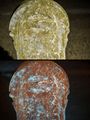  |
  |
  |
  |
  |
| |||||||||||||||||||||||||||||
| |||||||||||||||||||||||||||||
| 1996 1997 1998 1999 2000 2001 2002 2003 2004 2005 2006 2007 2008 2009 2010 2011 2012 2013 2014 2015 2016 2017 2018 2019 2020 2021 2022 2023 2024 2025 2026 | |||||||||||||||||||||||||||||
| New version Slide Show Most Popular Full List Statistics Technical Details Home Page | |||||||||||||||||||||||||||||
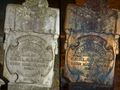
The image presents two photographs of a limestone grave marker, one taken under regular daylight and the other illuminated by a 365 nm ultraviolet (UV-A) blacklight at Calvert Cemetery, Texas, on November 3, 2024. **Daylight Photograph** The top photograph features the grave marker in its normal state. The stone appears to be covered with a light layer of dirt or algae, which is likely due to exposure to the elements and natural growth of vegetation over time. The surface has a rough texture, indicating that it may be weathered or worn. **UV-A Blacklight Photograph** The bottom photograph shows the same grave marker illuminated by a 365 nm UV-A blacklight. In this image, the dirt or algae on the stone's surface is significantly more pronounced and appears to have turned blue-green in color. This is due to the presence of fluorescent compounds called fluorophores, which are commonly found in biological materials such as fungi, algae, lichens, and mosses. The fluorescence of these substances causes them to absorb UV light and emit longer wavelengths of visible light, resulting in their characteristic colors. **Comparison** Comparing the two images reveals that the UV-A blacklight has highlighted areas on the stone's surface where biological material is present. This suggests that there may be a higher concentration of microorganisms or other organic matter on this part of the grave marker compared to the surrounding areas. The use of UV-A light in this context allows for a more detailed examination of the stone's surface and can help identify areas that require cleaning or preservation efforts. **Conclusion** In conclusion, the image demonstrates how different lighting conditions can reveal new information about a material's composition and condition. By using a 365 nm UV-A blacklight, it is possible to highlight areas of biological activity on the surface of the limestone grave marker, providing valuable insights into its history and potential preservation needs. – AI vision |
La luz solar cuando se expone a la luz diurna regular y también cuando se ilumina con una luz negra ultravioleta (UV-A) de 365 nm en el Calvert Cemetery. Calvert, Texas, noviembre 3, 2024. La imagen presenta dos fotografías de un marcador de tumba de piedra caliza, tomada bajo luz diurna regular y otra iluminada con una luz negra ultravioleta (UV-A) de 365 nm en el Calvert Cemetery, Texas, el 3 de noviembre de 2024. **Fotografía de día claro** La fotografía superior presenta el marcador de tumba en su estado normal. La piedra parece estar cubierta con una capa ligera de suciedad o algas, lo que se debe probablemente a la exposición a los elementos y al crecimiento natural de vegetación con el tiempo. La superficie tiene un textura áspera, lo que indica que puede estar erosionada o desgastada. **Fotografía de luz negra UV-A** La fotografía inferior muestra el mismo marcador de tumba iluminado por una luz negra ultravioleta (UV-A) de 365 nm. En esta imagen, la suciedad o las algas en la superficie de la piedra son significativamente más pronunciadas y parecen haberse tornado de color azul verdoso. Esto se debe a la presencia de compuestos fluorescentes llamados fluoróforos, que se encuentran comúnmente en materiales biológicos como hongos, algas, líquenes y musgos. La fluorescencia de estas sustancias las hace absorber luz ultravioleta y emitir longitudes de onda más largas de luz visible, dando lugar a sus colores característicos. **Comparación** Al comparar ambas imágenes se puede ver que la luz negra UV-A ha resaltado las áreas de la superficie de la piedra en donde hay materia biológica. Esto sugiere que existe una concentración más alta de microorganismos u otra materia orgánica en esa parte del marcador de tumba en comparación con las zonas circundantes. El uso de luz UV-A, en este contexto, permite un examen más detallado de la superficie de la piedra y puede ayudar a identificar áreas que requieren limpieza o esfuerzos de conservación. **Conclusión** En conclusión, las imágenes demuestran cómo diferentes condiciones de iluminación pueden revelar nueva información sobre la composición y estado de un material. Al utilizar una luz negra UV-A de 365 nm, es posible resaltar áreas con actividad biológica en la superficie del marcador de tumba de piedra caliza, proporcionando valiosos conocimientos sobre su historia y potenciales necesidades de conservación. – Spanish translation |
Keyword variants
high resolution online digital collection
burial of the dead
Lone Star State
last resting place
jaws of death
house of death
hand of death
finger of death
end of life
Calvert Cemetery photo
burial of corpse
United States
picture gallery
photo album
memorial stone
memorial park
leaving life
last rest
last home
eternal rest
documentary photographs
death knell
daily pics
burying ground
burial site
burial place
burial ground
burial chamber
bone house
vault
TX
travelogue
tombstone
tombscape
tombs
tomb
snapshots
sightseeing
remembrance
photowalks
photoblog
passing
necropolis
monument
memento
insculpture
headstone
graveyard
gravestone
gravesite
graves
graphic
funereal
funerals
funebrial
fotografias
foto
footstone
exit
dying
departure
crypt
cemeterium
cemetary
cemetarey
cementary
America